
The Twin Cities Butcher’s Guide to Meat Market Refrigeration
Cases, Coolers, Smokehouses, and Keeping It All Running — a plain-English guide to specifying, upgrading, and servicing the refrigeration in a full-service meat market.
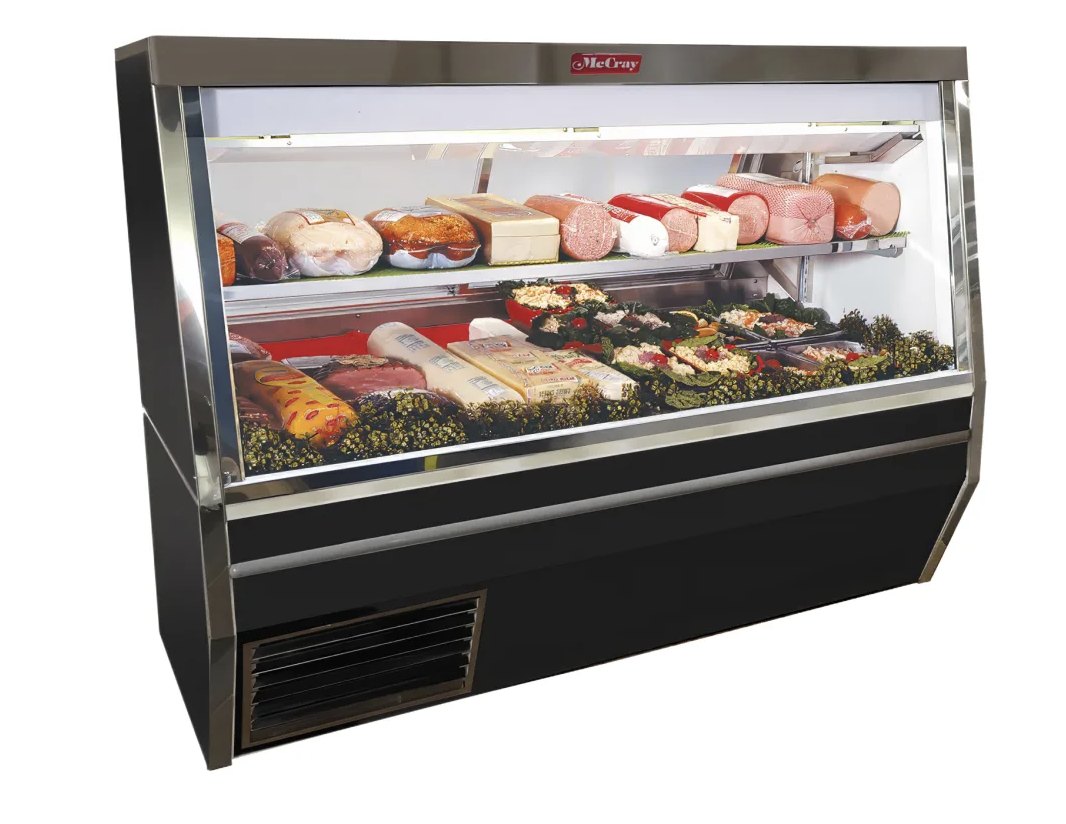
A meat market is the most demanding refrigeration job in retail. You’re holding fresh red meat right above freezing and at high humidity so it doesn’t dry out and lose weight, freezing product solid in another box, running a smokehouse hot, curing and stuffing sausage in a cold processing room, and merchandising all of it in glass cases on the sales floor — every one of those zones a different temperature and humidity target, every one of them a food-safety obligation.
Three things make or break a Twin Cities meat market: modern, reliable refrigeration (old, tired equipment is the #1 source of product loss and food-safety risk), outdoor condensers and remote systems set up for Minnesota winters, and — if you’re leasing a strip-mall space — a building heating and cooling system that’s actually sized to carry the heat and humidity your refrigeration dumps into the store. That last one is the mistake we see most: a butcher signs a lease, moves in a wall of cases, and the landlord’s rooftop AC was never built to handle the load. The store sweats all summer, the cases fight to hold temperature, and the energy bill goes through the roof.
This guide covers all of it — every case type, the processing side, why upgrading refrigeration is non-negotiable, the Minnesota outdoor-unit details, and the strip-mall HVAC and summer-humidity problem that quietly sinks meat markets.
Why Meat Refrigeration Is Unforgiving
Flowers wilt when you get it wrong. Meat becomes a food-safety and shrink problem — and both cost you money fast.
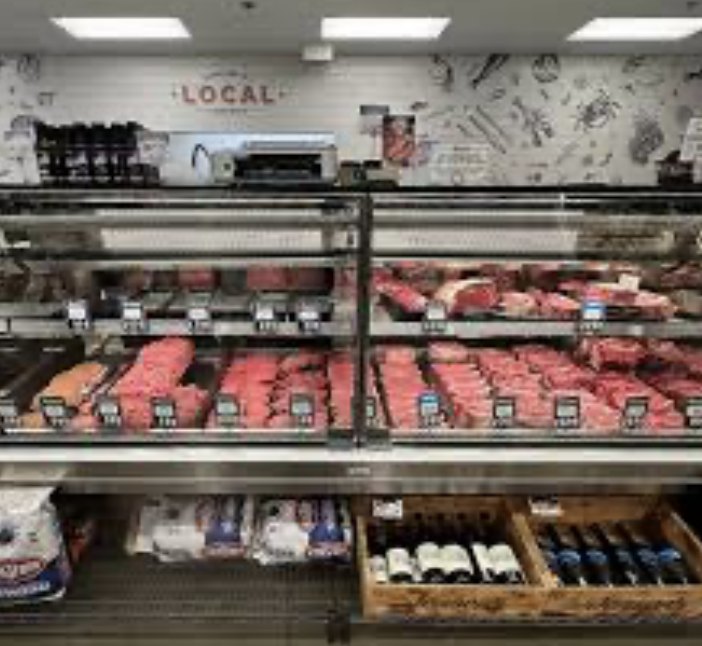
The Case and Cooler Lineup
A full-service market runs a mix of these. Each does a different job, holds a different climate, and stresses the building differently.
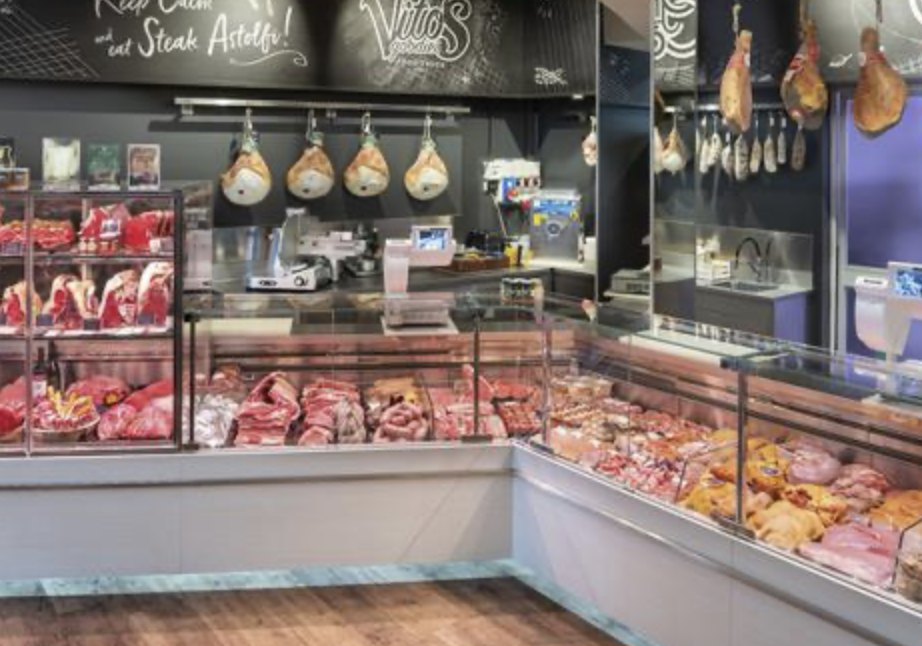
Service Deli Cases
32–40°F · TCS ≤41°F
The classic butcher counter — a clerk waits on the customer and pulls product. Curved or straight glass, single-deck display over refrigerated storage below. Holds deli meats, cheeses, fresh cuts, and value-added items. The merchandising workhorse — bright lighting and clean glass sell the cut.
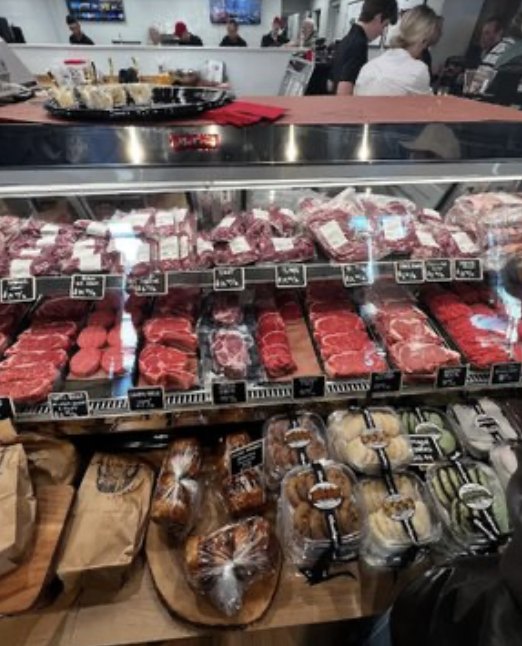
Fresh-Meat Display Cases
28–32°F · 85–95% RH
Built specifically for raw red meat and poultry, with airflow and humidity control designed to keep the meat from drying out in the case. This is where the humidity detail matters most: a generic deli case will dry your steaks out and cost you weight.
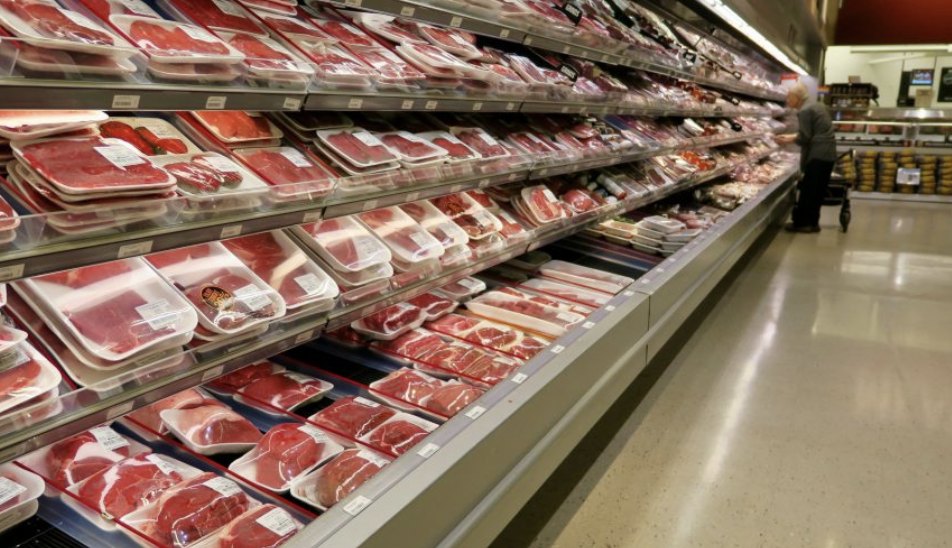
Multideck Open Cases
Air curtain · medium-temp
The tall, open, multi-shelf merchandisers — packaged meat, bacon, sausage, cheese, grab-and-go. An air curtain holds the cold in instead of a door, which makes them fast for customers but the hungriest cases in the store for energy and the most sensitive to store humidity.
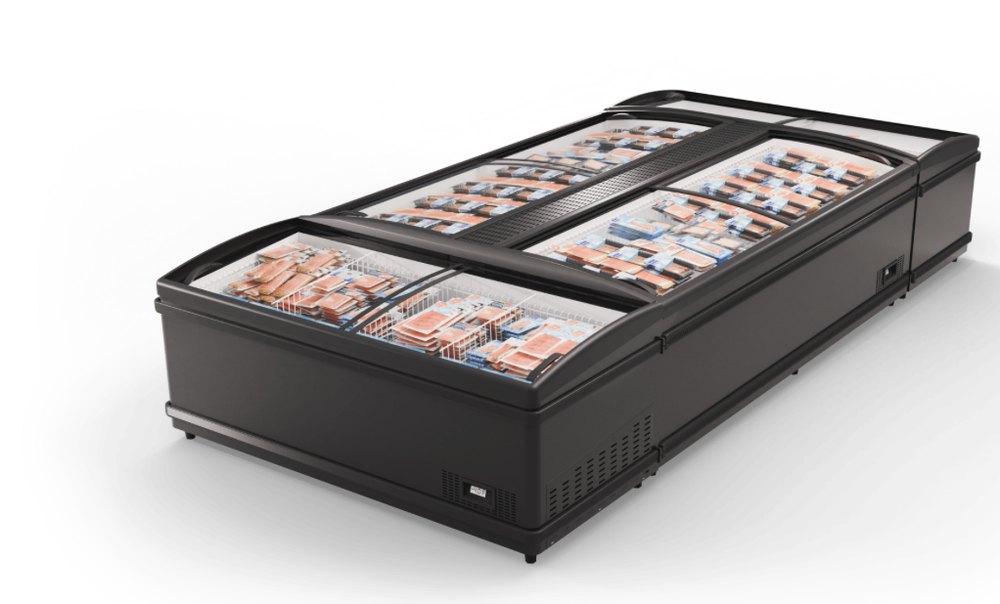
Coffin / Well Cases
Medium- or low-temp
The open-top horizontal cases — “coffin,” “bunker,” or “well” cases — with one display level customers reach into directly. Great for high-volume, grab-and-go packaged product. Like multidecks, they’re open to the room, so store air and humidity blow straight across the product.
Open Freezer Cases
0°F to -10°F
Open coffin/well or multideck cases running at freezer temps — frozen sausage, bulk cuts, value packs. The hardest-working, highest-humidity-sensitivity cases in the building: any moist store air that rolls in freezes onto the coil and the product, driving frost, defrost, and anti-sweat-heater energy way up.
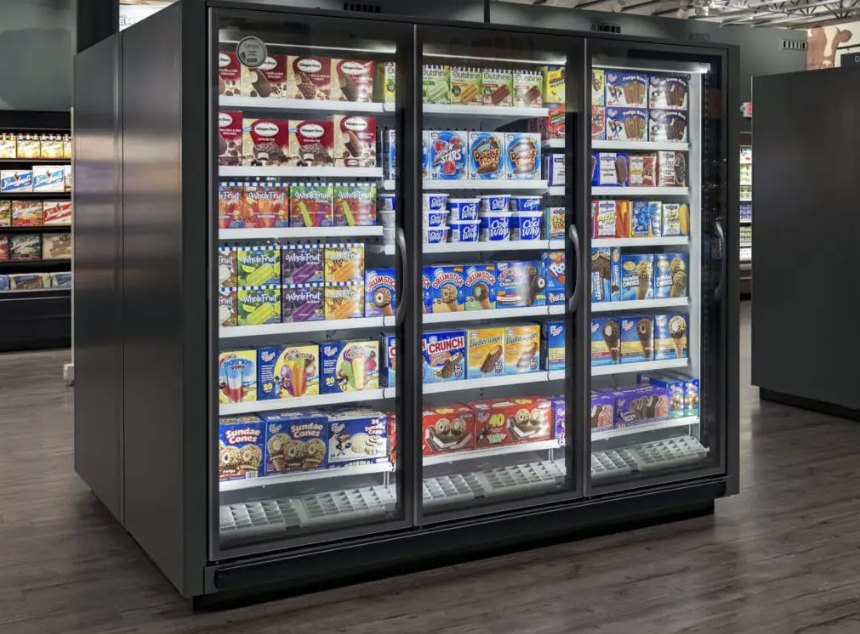
Reach-In Coolers
33–41°F
Glass- or solid-door upright cabinets — backup display, beverages, packaged product, grab-and-go. Reach-ins can be bought self-contained (compressor in the cabinet, rejecting heat into the room) or remote (tied to an outside condenser). For a meat market, remote is almost always the better buy.
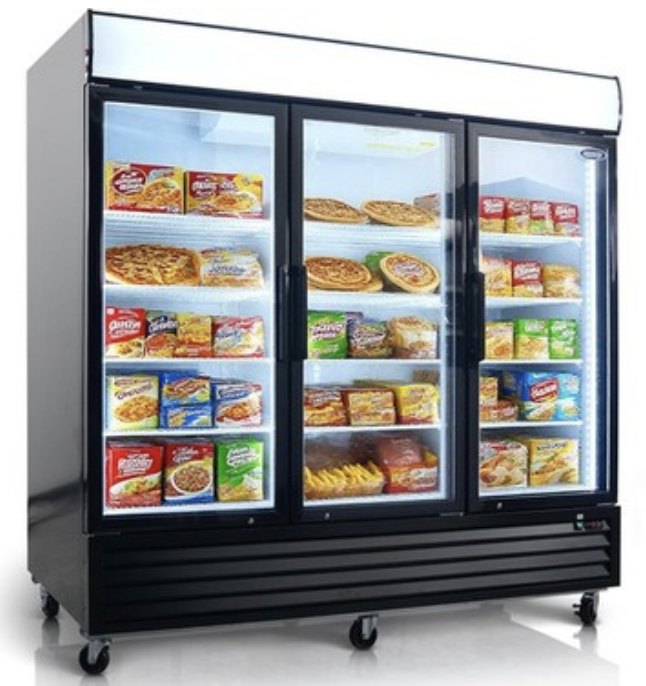
Reach-In Freezers
0°F & below
Same format, for packaged frozen product on the floor or in back. Like reach-in coolers, these come self-contained or remote — and on a freezer, the heat a self-contained unit dumps into the store is even harder on your summer AC, so a remote condenser is the smarter choice in a serious market.
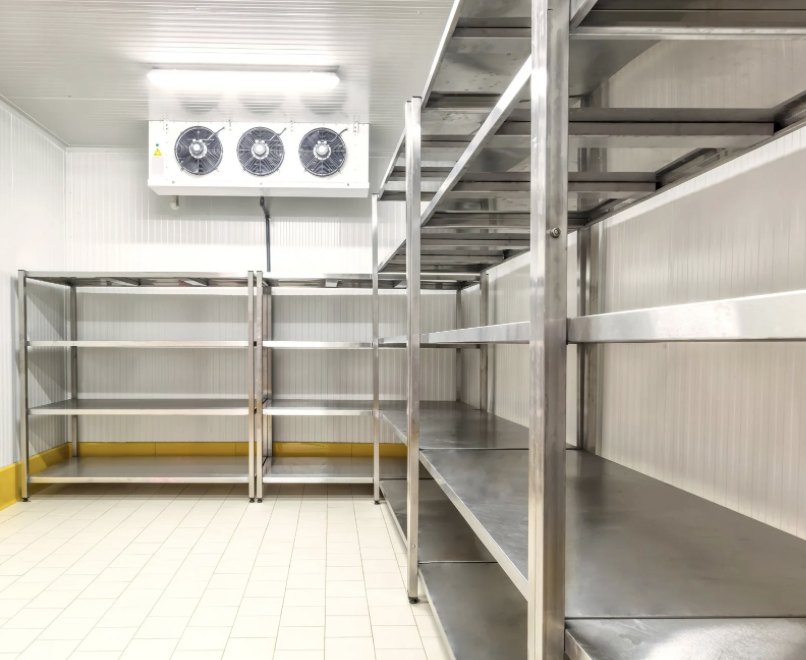
Walk-In Coolers
28–35°F
The back-of-house workhorse — carcasses, primals, back-stock, and prep (fresh meat ideally 28–32°F). This is where your inventory lives. If it fails, you lose everything in it at once.
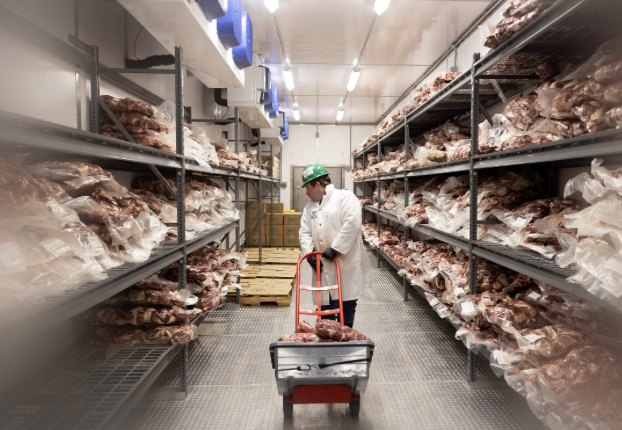
Walk-In Freezers
0°F to -10°F
Long-term frozen storage and your sausage/processing freezer needs. Big load, big consequence if it goes down, and the box most prone to cold-weather and defrost trouble.
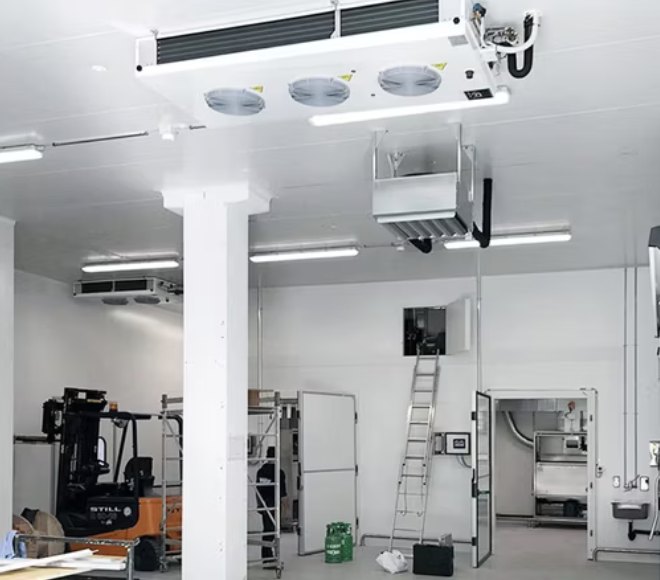
Dry-Aging Room (If You Age)
34–38°F · 75–85% RH
A dedicated, tightly controlled cooler — held steady for weeks with gentle, controlled airflow. Effectively its own precision climate, and worth treating as a specialty system, not just “another walk-in.”
The Processing Side: Smokehouse, Sausage Kitchen, Custom Cutting
A market that smokes its own and makes custom sausage and steaks has production zones on top of the refrigeration — and they have to coexist with all that cold equipment.
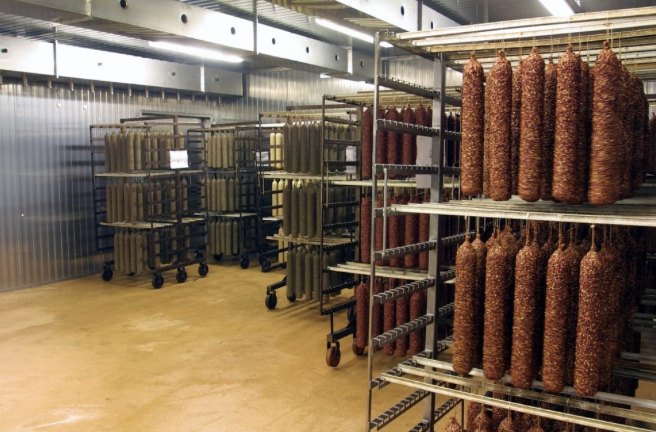
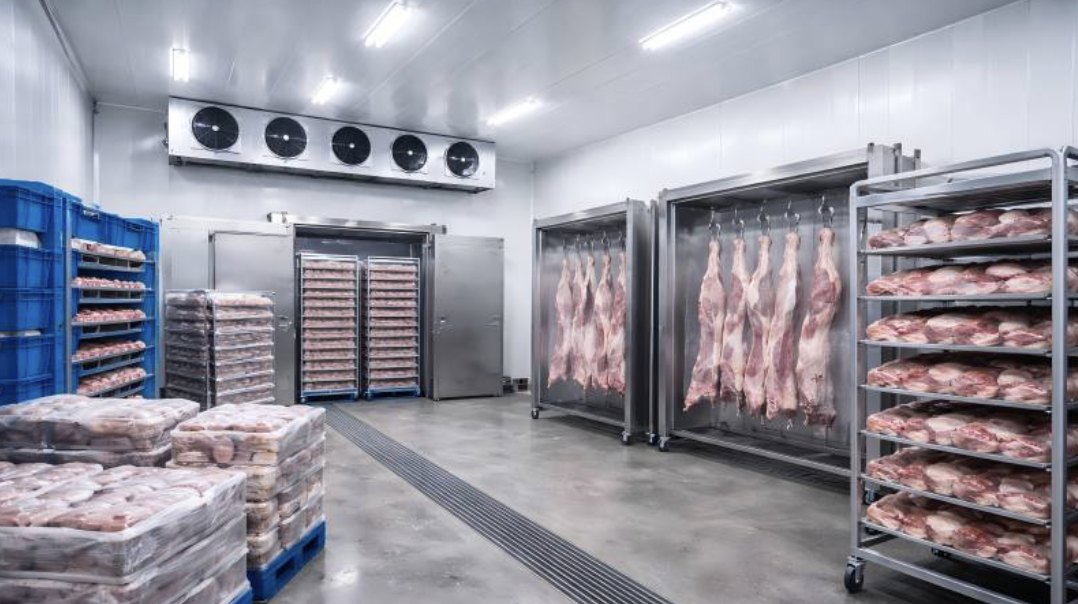
The smokehouse. Commercial smokehouses run hot — typically 130–140°F during the heating stage, with cold-smoking below ~90°F — and they’re built with inlet and exhaust fans, dampers, and computerized control of temperature, humidity, and smoke. The critical infrastructure points: a proper exhaust to move smoke out, and makeup air to replace what the smoker and exhaust pull, so the room doesn’t go negative and starve other equipment (or pull combustion products around). Humidity is managed inside the smoke cycle — low early to set the casing, higher later for texture.
The sausage / processing kitchen. Cutting, grinding, mixing, stuffing, and curing want a cold processing room to keep product below the safety threshold while it’s worked — meat shouldn’t sit warming up on a bench. That means the processing area needs its own cooling and, often, its own refrigeration, on top of the display and storage systems.
The throughline: the smokehouse adds heat and exhaust, the processing room adds cooling demand, and the cases and walk-ins add even more — all in the same building. Ventilation, makeup air, and the HVAC have to be designed to handle the whole stack together, not piecemeal.
Why Upgrading the Refrigeration and Outdoor Units Is a Must
A lot of meat markets — especially shops moving into an older or second-hand space — inherit tired refrigeration: aging self-contained cases, a mismatched pile of condensers, a walk-in compressor that’s been limping for years. Running that is a false economy, and here’s why upgrading isn’t optional:
- Old equipment is the #1 cause of product loss. A compressor that fails on a Friday night takes a full walk-in of inventory with it. The cost of one loss event often exceeds the cost of the upgrade.
- Tired systems can’t hold the tight, high-humidity conditions meat needs. That shows up as shrink (weight loss), dull color, and short shelf life — money walking out the door every day, not just on failure days.
- Modern remote/rack refrigeration is far more efficient and reliable than a wall of old self-contained cases — and it gets the heat and noise out of the store (which matters enormously in a leased space).
- Refrigerants and parts. Older systems often run phased-out refrigerants that are expensive and getting harder to source. When a leak hits, you don’t want to discover the refrigerant is unobtainable.
- Energy. Newer compressors, EC fan motors, LED case lighting, and proper controls cut the single biggest operating cost in the store.
But Don’t Blindly Scrap the Old Gear — Some of It Is Bulletproof
Here’s the honest counterpoint, and it’s one a lot of slick sales pitches won’t tell you: some of the old refrigeration is a die-hard, rebuildable, bulletproof deal. A lot of the older cases, compressors, and condensers were built with heavy, high-quality copper coils and over-built components. They’re not the most energy-efficient — but they run for decades, they almost never strand you, and when something does wear out they’re easily rebuildable with parts you can actually get.
A lot of new equipment, by contrast, is built lighter to hit a price — including flimsy aluminum coils that are prone to leaks and far harder (sometimes impossible) to repair, so a coil leak means replacing the whole case. That’s the trade-off nobody mentions when they tell you to “upgrade everything.”
So the smart move isn’t “new = good, old = bad.” It’s a case-by-case call:
- Upgrade the stuff that’s genuinely failing, runs a phased-out refrigerant, can’t hold meat-grade humidity, or is bleeding you on energy.
- Keep and rebuild the old copper-coil workhorses that still hold temperature and humidity well — a rebuild often costs a fraction of a new case and buys you years of reliable, repairable service.
- Get someone who knows refrigeration to actually look at what you’ve got before anyone starts ripping things out.
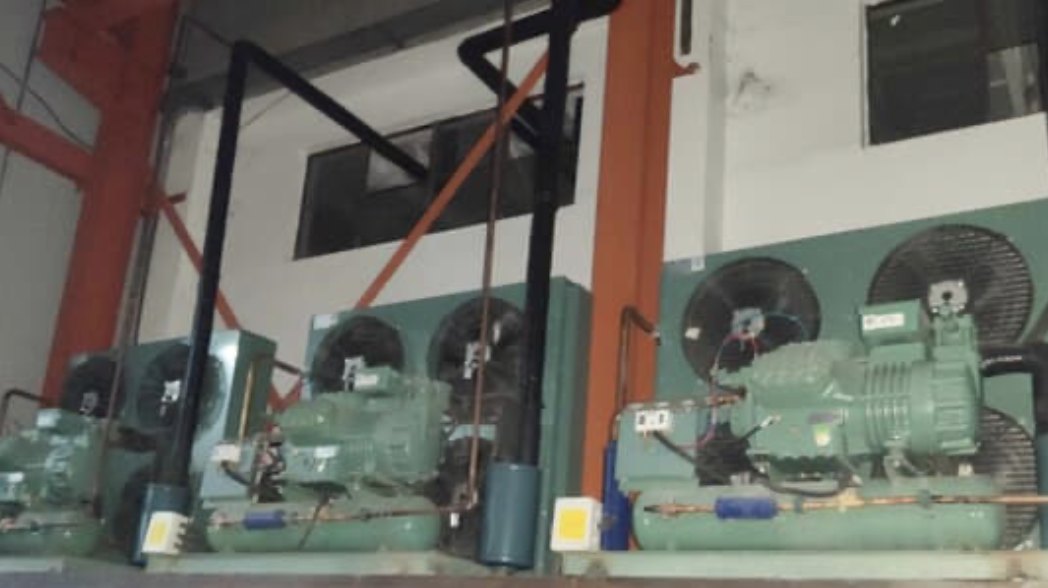
And the outdoor units specifically must be modernized and built for our climate — which is the part most out-of-state equipment and warm-climate installers get wrong.
Get the Heat Outside: Remote Condensers and Rack Systems
Almost every piece of meat-market refrigeration can be bought as self-contained (compressor and condenser inside the unit, heat dumped into the store) or remote (the case ties into a condenser somewhere else). Even reach-in coolers and freezers — which people assume are always plug-in units — can be ordered remote. For a meat market, remote is the better option almost every time. It gets the heat, noise, and humidity out of your sales floor and off the back of your building HVAC.
The goal for any serious market is the same: stop scattering heat all over the store and consolidate it outside. There are two ways to get there:
- 1. Move all the condensers outside, in one location. Instead of a dozen self-contained cases each rejecting heat into the room, you run each case and cooler to its own remote condenser and group those condensers together in one outdoor spot. The heat leaves the building, the store stays cooler and drier, and the units are in one place where they’re easy to service and easy to protect from snow and wind.
- 2. Go to a refrigeration rack system. The step up that larger and growing markets should look hard at. A compressor rack runs multiple cases and coolers off a shared bank of compressors instead of a separate compressor for every box. The rack mounts indoors and ties out to an outdoor condenser that rejects all the heat outside. Parallel compressors load and unload as demand changes, the heat goes outdoors, and you get far better efficiency, redundancy, and serviceability — if one compressor hiccups, the others carry the load, versus a self-contained case where a single failure takes that box down.
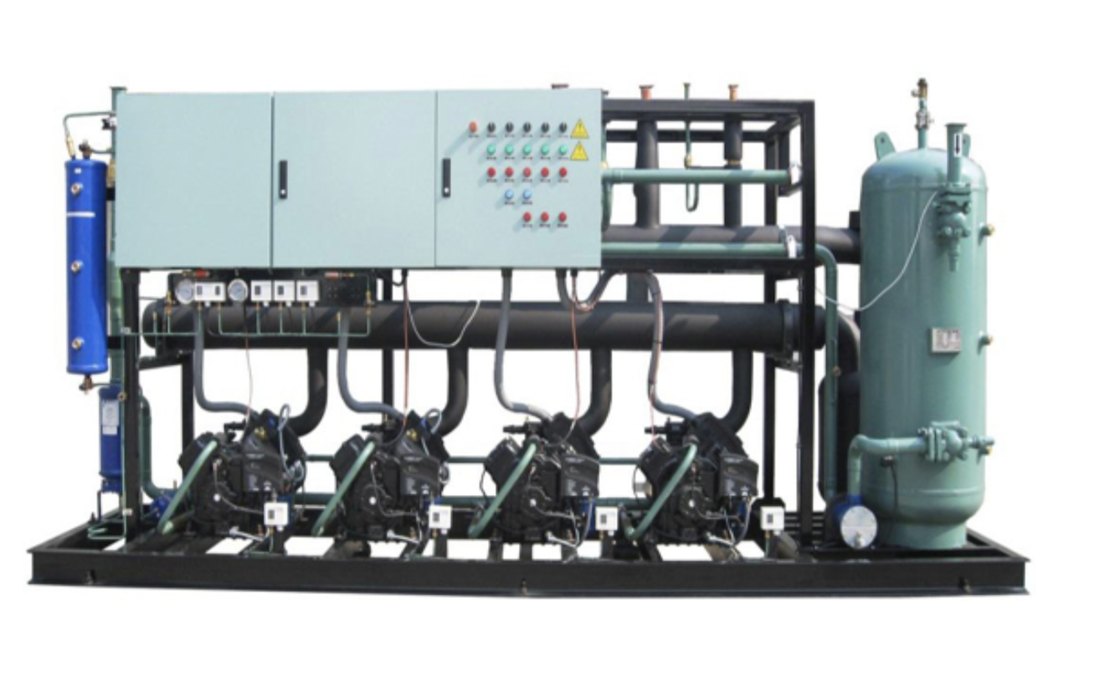
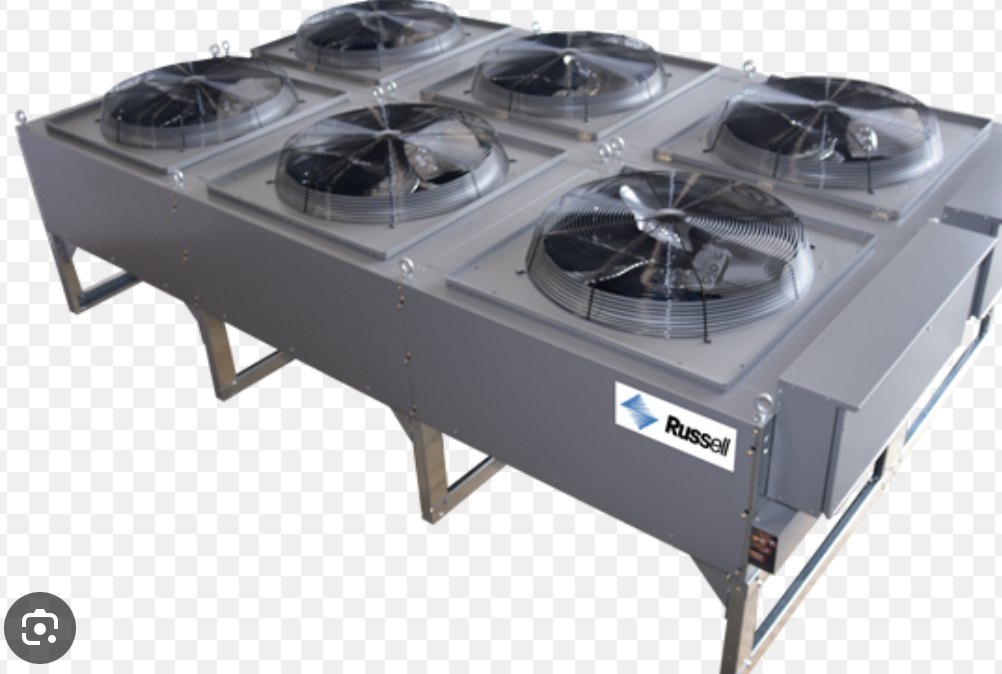
Either way, the principle is the same and it’s the right principle for a Minnesota meat market: keep the refrigeration heat out of the store, put the heat-rejecting equipment in one controlled outdoor location, and don’t make your building’s air conditioning fight a dozen little heaters all summer.
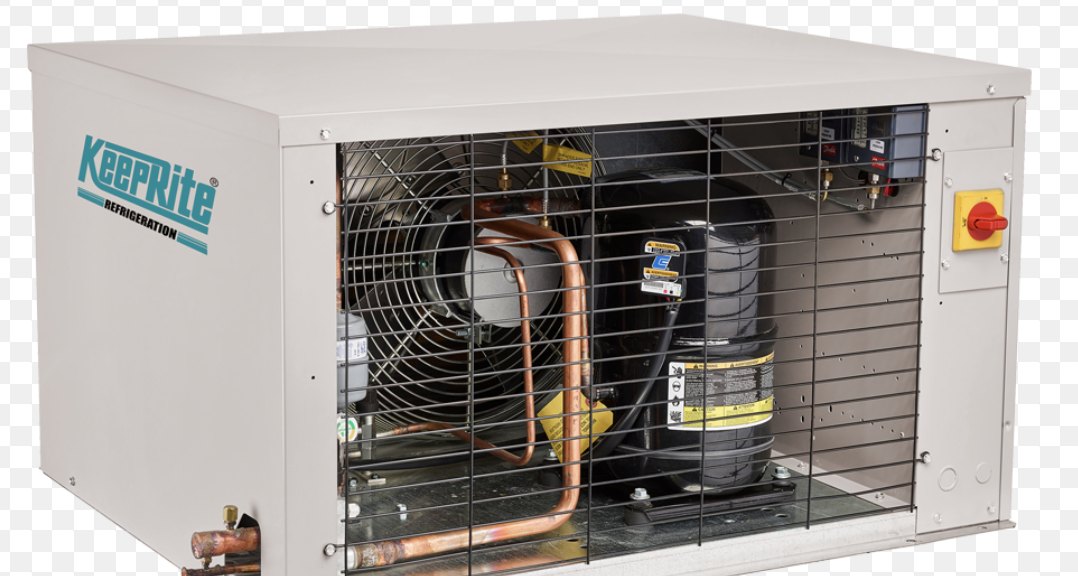
Outdoor Condensers and the Cold
Getting refrigeration heat out of the building is the right move — but in Minnesota, an outdoor unit that wasn’t set up for our winters will fight you every December through February. The same physics that bite flower shops bite meat markets harder, because you’ve got more refrigeration and a freezer in the mix.
Low-ambient head pressure. A system needs enough high-side (“head”) pressure to push refrigerant through the metering device and actually cool. When it’s bitter cold out, frigid air through the outdoor condenser drops head pressure too low and the system can’t meter correctly — so the box won’t hold temperature even though it’s running, with short-cycling, erratic run times, temperature swings, and unpredictable defrosts. For a meat market that’s not “the flowers look tired” — it’s a TCS temperature excursion.
The fixes a Minnesota install needs
- Head-pressure control — at minimum fan cycling, but fan cycling alone isn’t enough: on cold, windy days the wind blows through the coil and over-cools it even with the fan off.
- A flooded-condenser / head-pressure (bypass) valve setup for true low-ambient performance — holds head pressure up and can bypass the condenser coil when it’s frigid. The right setup for a climate that’s cold and windy all winter.
- Crankcase heaters so refrigerant doesn’t migrate into and dilute the compressor oil during cold-soaked off cycles.
- Wind shielding and smart placement so prevailing wind and snow drift don’t sit on the unit.
Snow and ice. An outdoor condenser buried in a drift or iced over can’t move air — it can’t reject heat and performance collapses. Units need to sit above expected snow level, clear of roof shed-off and drift zones, with clearance around them, and a check after big storms.
Condensate drain freezing. Coolers and cases pull water out of the air, and that drain has to go somewhere. Run it through an unheated wall, a cold corner, or outside, and it can freeze solid — backing water up into the case or onto your floor. Insulate the line, keep the run short, route through conditioned space, and add heat tape on vulnerable sections.
Bottom line: modern remote refrigeration with outdoor condensers is the right architecture — but only if it’s installed for our climate, with low-ambient head-pressure control, freeze-protected drains, and snow/wind-smart placement. An outdoor unit set up like it’s in Texas will give you food-safety scares every cold snap.
Your Refrigeration Is Also a Heating Load on the Store
This is the single most overlooked issue for a meat market in a leased, multi-tenant strip-mall space — and it sinks shops quietly.
Every refrigerator is a heater facing the room. Refrigeration doesn’t destroy heat — it moves it. Heat pulled out of your meat (plus the heat the compressor itself makes) has to go somewhere. With self-contained cases and reach-ins, all of that heat is rejected right back into the store. A wall of self-contained meat cases, deli cases, reach-ins, and coffin freezers can throw an enormous, continuous heat load into your sales floor — 24/7, 365.
The landlord’s rooftop unit was almost never sized for that. A strip mall is a row of micro-climates, and the base-building HVAC was typically sized for a generic retail tenant — a clothing store, not a butcher shop running a dozen compressors. Drop a full meat market into that space and the existing rooftop AC can’t keep up: a hot, sticky sales floor in summer, cases struggling to hold temperature against a warm room, and your compressors working overtime to fight a building that’s cooking them.
So the building’s heating and cooling has to be upgraded as part of the buildout. When you take a strip-mall space for a meat market, the HVAC plan is not “use what’s on the roof.” It’s:
- Add cooling capacity (tonnage) to carry the refrigeration heat load the cases dump into the store, on top of the normal people/lighting/solar load. Undersize this and everything downstream suffers.
- Get the refrigeration heat out of the building where you can — favor remote/outdoor condensers over self-contained cases so the heat goes outside instead of into the room the AC then has to fight. One of the biggest single moves you can make.
- Plan the makeup air and exhaust for the smokehouse and processing rooms into the same design, so the building isn’t running negative and the systems aren’t fighting each other.
Skip this and you’ve built a store that’s uncomfortable for customers, expensive to run, and hard on the very refrigeration you just paid for.
Summer Humidity Removal: The Other Half of the HVAC Job
Cooling the store isn’t enough in a Minnesota summer — you have to pull the moisture out of the air, and in a meat market that’s not a comfort nicety, it’s a refrigeration-performance issue. Here’s the chain of cause and effect, straight from supermarket refrigeration engineering:
- Refrigerated cases interact directly with store air — they constantly trade heat and moisture with the room. Most cases are rated for about 55% RH at 75°F, but they actually run better at 40–45% RH.
- Humid store air is a tax on your refrigeration. Moist air infiltrating open cases condenses on interior surfaces and freezes frost onto the evaporator coils — driving more frequent defrosts, more anti-sweat-heater energy, and case sweating that drips on product and floors.
- Drier air pays you back. Reducing store humidity shifts the dehumidification work off your refrigeration compressors and onto the more efficient HVAC system. Published supermarket data shows a roughly 20% reduction in space humidity yielding on the order of 3–21% lower compressor energy, 4–6% less defrost energy, and 15–25% less anti-sweat-heater energy.
- Why it’s expensive to ignore: a low-temp case spends roughly 4–6 kWh of electricity to pull one kilogram of moisture out of the air. Letting your cases do the dehumidifying because the building HVAC won’t is one of the most expensive ways to run a meat market.
What that means for the buildout: the air-conditioning has to be specified to dehumidify, not just cool — properly sized AC with adequate latent (moisture-removal) capacity, and in a humid-summer climate often a dedicated dehumidification or reheat strategy so the store holds a low, steady relative humidity. Do that and the cases hold temperature easily, frost and sweat problems shrink, anti-sweat and defrost energy drop, and the whole refrigeration plant runs cooler and lasts longer.
Automation, Monitoring & Leak Detection: Catch Trouble Before It Costs You
The single scariest thing in a meat market is the silent overnight failure — a case or walk-in quits at 11 p.m. and you find out when you walk in the next morning to a box of ruined product and a health-code problem. Modern automation and monitoring exist specifically to make sure that never happens.
- Refrigerant leak detection. A slow leak is a system killer — the case gradually loses its charge, struggles to hold temperature, and eventually the compressor fails, often taking your product with it. Leak detection catches it early so you fix a small problem on your schedule instead of losing a whole system at the worst possible time.
- Smart monitoring and alerts. Networked temperature and performance monitoring watches every case and walk-in around the clock and alerts you over Wi-Fi, text, or app the moment something runs out of range — a case drifting warm, a walk-in not pulling down, a defrost that didn’t terminate, a door left open. You get the warning while it’s still a five-minute fix, and a clean record for food-safety documentation.
- System automation and controls. Modern controls coordinate defrosts, stage a compressor rack as demand changes, manage anti-sweat heaters and case lighting, and optimize the whole plant for efficiency — while logging everything so problems are easy to diagnose.
Keeping It All Running: Maintenance for a Twin Cities Meat Market
The market with a maintenance plan runs for years and sips energy. The one that waits for failures loses a walk-in of product on the worst possible day. The essentials:
- Condenser coils — clean them. Dirty condensers are the #1 cause of struggling refrigeration. Soft brush and vacuum, never a wire brush. At least every 6 months, quarterly in a busy shop, and more often near grinders and flour/spice in a sausage operation.
- Door gaskets and case seals. Cracked or gapping gaskets leak warm, humid air in — spiking energy and causing icing and case sweating. Inspect, keep them pliable, replace the moment they stop sealing.
- Defrost — verify it works. Frost returning fast after a defrost, or a case running warm, points to a defrost or sealing problem. On freezers and open cases this cascades quickly.
- Condensate drains — keep them flowing and freeze-protected. Flush lines so they don’t clog; insulate and heat-tape anything that could freeze in winter.
- Temperature monitoring. With TCS product on the line, continuous monitoring/alarming on walk-ins and cases is cheap insurance against a quiet overnight failure becoming a total loss and a health-code problem.
- The processing side. Keep smokehouse exhaust and makeup air clear and balanced, and keep the sausage/processing room refrigeration on the same maintenance schedule as everything else.
- Seasonal checks. A pre-summer check (AC and refrigeration ready for the heat-and-humidity load) and a pre-winter check (low-ambient controls, heat tape, drains) keep you ahead of the two times of year that break meat-market refrigeration.
Common Problems We See — And What They Usually Mean
Caught early, most of these are tune-ups and small parts. Ignored, they become compressor failures, lost inventory, and failed inspections.
What temperature should a meat case hold?
TCS product must be 41°F or below by code. Fresh red meat holds best at 28–32°F; deli cases at 32–40°F; freezers and freezer cases at 0°F to -10°F; a dry-aging room around 34–38°F.
Why does my meat dry out and lose weight in the case?
Humidity too low. Fresh meat wants 85–95% relative humidity in the display case. A case built for general deli use, or a tired system that can’t hold humidity, dries the surface and costs you weight (shrink) on product you sell by the pound.
I’m taking a strip-mall space — what’s the catch?
The landlord’s rooftop AC almost certainly wasn’t sized for a meat market’s refrigeration. Your cases dump heat (and self-contained units dump a lot of it) into the store, and the building HVAC has to be upgraded to carry that heat-and-humidity load. Plan the cooling, dehumidification, and the smokehouse makeup air/exhaust into the buildout — don’t assume what’s on the roof will do.
Do I really need to upgrade old refrigeration if it “still works”?
Not necessarily — it depends on the equipment. Upgrade the stuff that’s genuinely failing, runs a phased-out refrigerant, can’t hold meat-grade humidity, or is bleeding you on energy. But some old copper-coil cases, compressors, and condensers are bulletproof and easily rebuildable — and a rebuild often costs a fraction of a new case while outlasting the lighter, leak-prone aluminum-coil equipment sold today. Have someone who knows refrigeration look at what you’ve got before scrapping it.
Self-contained or remote condensers — even on reach-ins?
For a serious meat market, remote is generally the way — and yes, even reach-in coolers and freezers can be ordered remote. Remote gets the heat, noise, and humidity out of the store. The best setups either move all condensers outside in one location, or step up to a refrigeration rack system (compressor rack indoors, tied to an outdoor condenser). The Minnesota catch: those outdoor units must be set up for cold weather.
Why is summer humidity such a big deal?
Humid store air makes every refrigerated case work harder — more defrost, more anti-sweat-heater energy, case sweating, and frost. Cases run best around 40–45% RH, and a drier store measurably lowers refrigeration energy and extends equipment life. The AC has to dehumidify, not just cool.
Can I get alerted before a case fails?
Yes — and you should. Refrigerant leak detection catches a leak before it drains a system and kills a compressor, and smart monitoring watches every case and walk-in 24/7 and alerts you over Wi-Fi, text, or app the second something runs out of range. For a market with TCS product and a full freezer, it’s cheap insurance against a silent overnight failure that costs thousands.
How often should a meat market’s refrigeration be serviced?
Plan on condenser cleaning and a full system check at least twice a year, plus gasket, defrost, and drain inspection — ideally a pre-summer check (heat/humidity readiness) and a pre-winter check (low-ambient controls, heat tape, drains). Continuous temperature monitoring on walk-ins and cases is strongly recommended.
A meat market is a stack of climates — fresh, frozen, dry-aged, deli, smoked, processed — plus a building that has to carry all the heat and humidity refrigeration creates. T&H Mechanical installs and services the cases, the outdoor units, and the heating, cooling, and ventilation that supports them — built for our climate — across the East Metro & Western Wisconsin.
(651) 413-333124/7 Emergency Service
