
The Best Walk-In Setup for Cold Beer
Coil sizing, defrost, airflow, doors — and a redundant setup that holds temperature even if a compressor quits. How to build a beer cooler that keeps product cold and never lets you down.
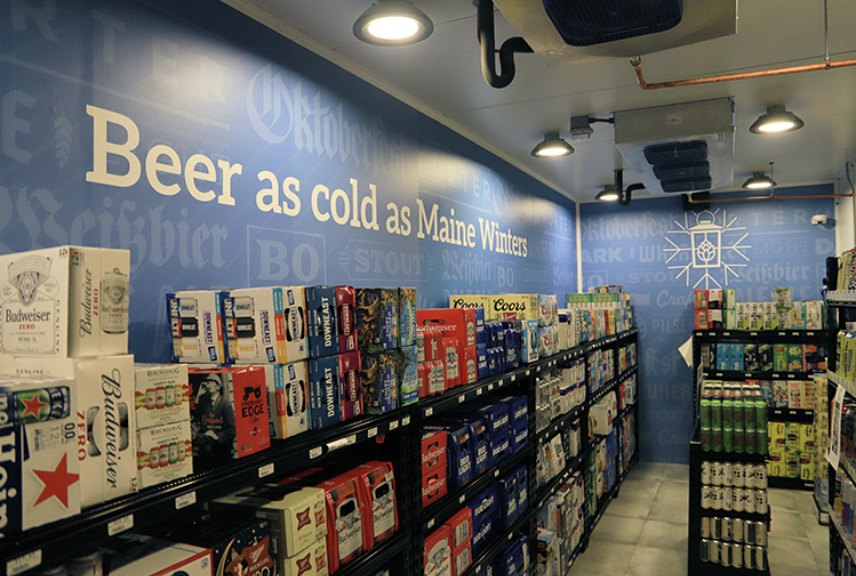
A great beer walk-in is built to hold a tight, even, cold temperature (most owners want 32–36°F) without icing up or freezing product. The best setups pair a properly sized evaporator, a defrost method that keeps up with a cold box, strong even airflow, well-sealed and anti-sweat-heated glass doors, and tight humidity control. The ultimate build goes further: four evaporators split across two condensing units, so the box runs its coldest and keeps holding temperature even if one system fails.
Start With the Target Temperature
Beer and beverages are usually held 34–38°F, with cold-focused liquor stores pushing toward 32–34°F. Remember beer freezes around 27–28°F, so the design goal is a tight, even cold temperature with no freezing cold spots — not just a low number on the thermostat.
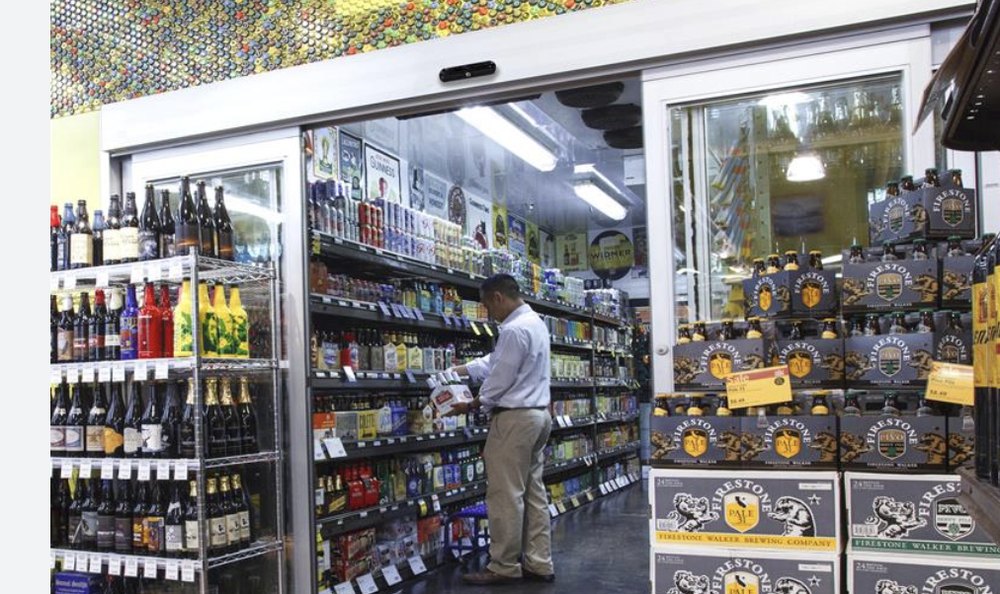
Beer’s One Big Advantage: Humidity Doesn’t Matter
Unlike produce or fresh meat, beer in cans, bottles, and cardboard doesn’t dry out or care about humidity. That means you can run a colder coil to get the box nice and cold without worrying about dehydrating product. The trade-off is that a colder coil frosts faster — so the defrost system has to be built to match. In a beer box, defrost is where the money should go.
Size the Evaporators for an Even, Cold Box
The evaporators should be sized and placed so cold air reaches every corner — no warm pockets, no freezing blast zones right under the coil. On bigger boxes that means multiple coils on one or more condensing units, which also lets you stagger the defrost so the box never loses all its cooling at once. Good airflow design is what gives you that tight, even temperature customers feel when they grab a cold case.
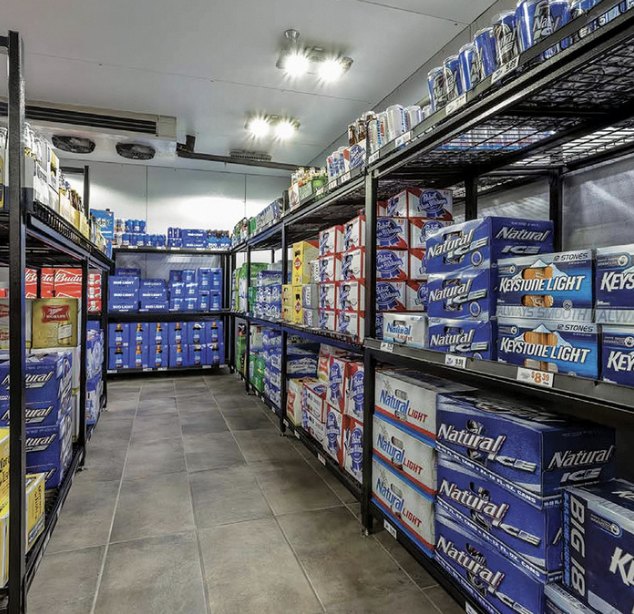
The Ultimate Setup: Four Evaporators + Dual Condensers
If you want the best beer cooler money can build — the coldest, most even temperature, and a box that won’t go warm the moment something breaks — the answer is four evaporators split across two (or more) condensing units. Here’s why it wins on every front:
Three Reasons This Setup Wins
Coldest, most even temperature. Four evaporators put a lot of coil surface across the box, so each coil only has to run slightly colder than the air. That holds a tight, even temperature in every corner — no warm pockets, no freezing blast zones — and gets the box as cold as you want it.
Redundancy that protects your inventory. Split those four coils across two independent condensing units and you’ve built in a backup. If one compressor or condenser fails, the other system keeps running — so instead of the whole box going warm and you losing product, it holds temperature far longer while we get out to fix it. For a cooler full of beer, that can be the difference between a service call and a loss.
Electric defrost is the ultimate add-on. Put electric defrost on those coils and you can hold a true cold box and still clear every coil completely — staggered one at a time so the box never loses its cooling. It’s the piece that lets the whole system run as cold as you want without ever icing up.
Match the Defrost to a Cold Box
This is the make-or-break. Air (off-cycle) defrost is the cheapest, but it gets marginal below about 34°F because the coil can’t melt frost any faster than cool box air allows. For a genuinely cold beer box, the reliable answer is electric defrost (it clears the coil regardless of box temperature) and, on a multi-coil box, staggered per-coil defrost so the box never loses all its cooling at once. Any time you stagger, add the compressor protection — a crankcase pressure regulator and a suction accumulator.
Don’t Skip the Doors
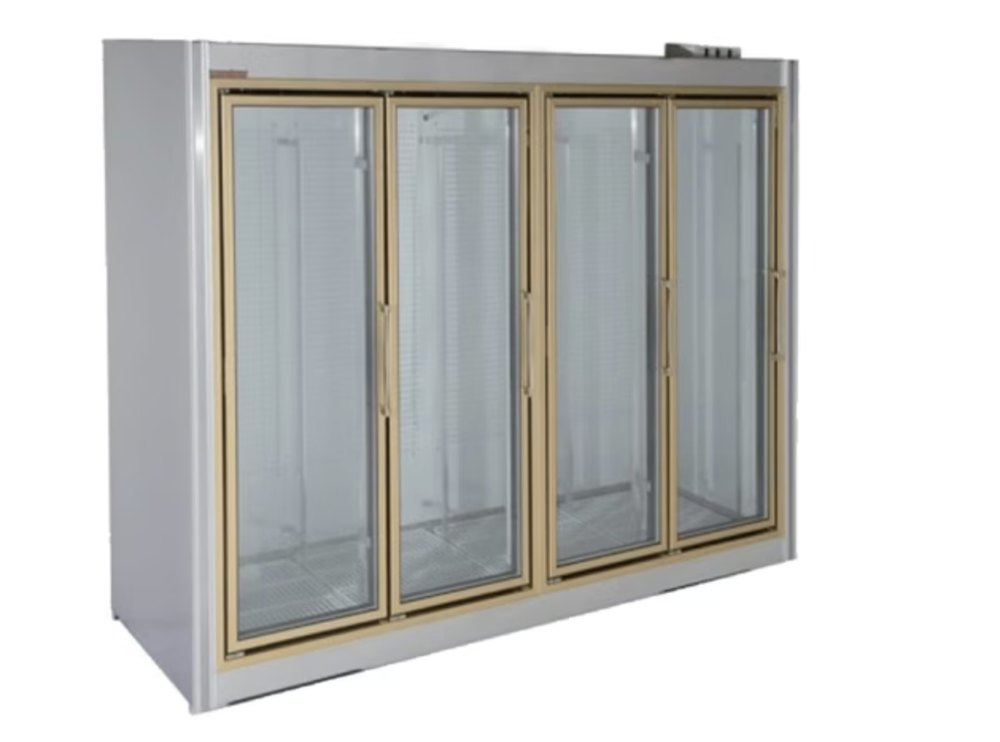
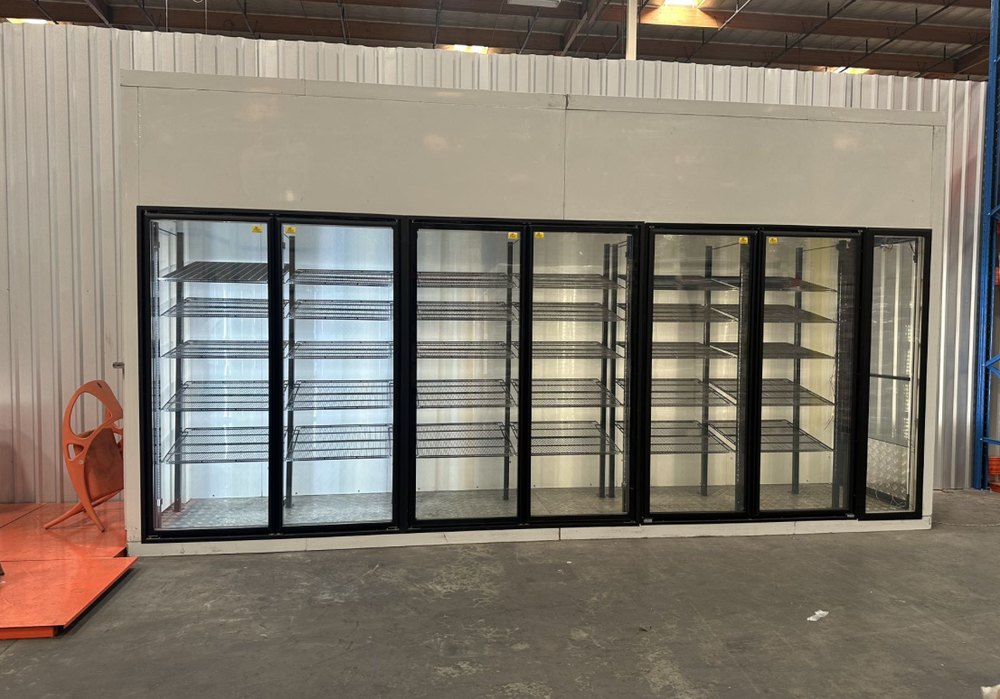
Doors are where the cold escapes and the moisture enters. For glass merchandising doors facing the sales floor, you need anti-sweat heaters so the cold glass doesn’t sweat or frost in humid weather — otherwise customers can’t see the product and you get water on the floor. For a stocking door, a good gasket, a self-closer, and strip curtains dramatically cut infiltration. Every door opening is a shot of warm, humid air onto your coil, so door management directly controls how hard your defrost has to work.
Self-Contained or Remote?
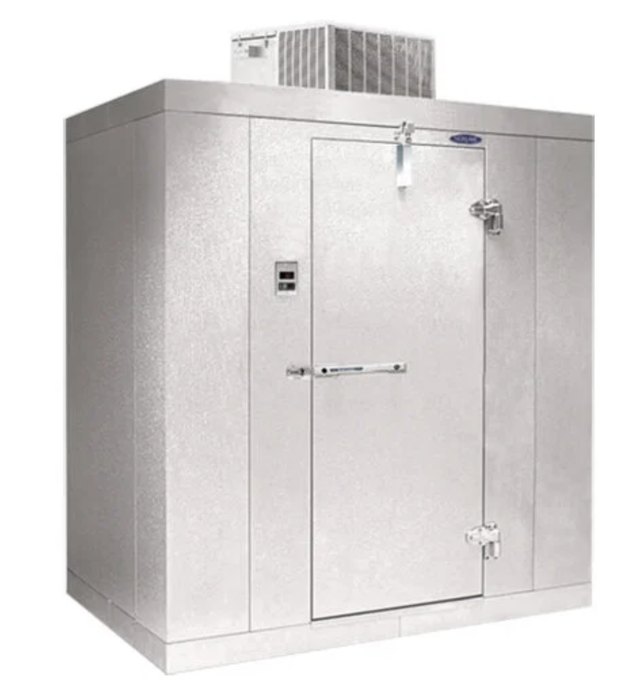
Smaller stores can do well with a self-contained walk-in — the condensing unit sits right on top of the box. It’s simpler and cheaper to install. But it dumps its heat into the room, can be noisy, and gives you no backup if it quits. Remote condensing moves that heat and noise outside and — critically — lets you split the load across two units for the redundancy above. For a high-volume beer cooler, remote (and redundant) is worth it.
Either way, the fundamentals hold: size the coils for an even cold box, pick a defrost that keeps up, seal the doors, and control the moisture. And get the condensate drain right — trapped, sloped, and, in Minnesota, heat-taped anywhere it runs through cold space, or it’ll freeze, back up, and ice the box floor. It’s a small detail that causes big callbacks.
Build for the July Load
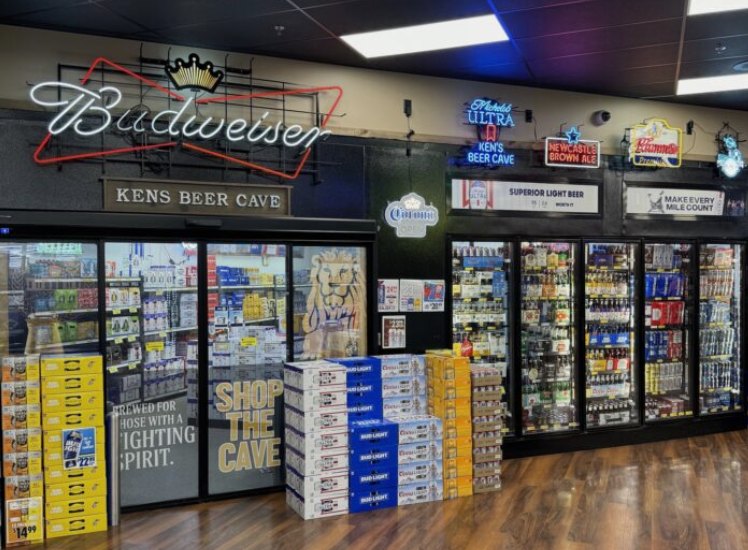
The hardest day for your beer cooler isn’t the coldest day of winter — it’s the most humid day of summer, when door traffic is high and outdoor moisture is pouring into the store and the box. Build the defrost, airflow, and redundancy to handle that worst-case load and the cooler holds cold beer effortlessly the rest of the year. If your condensing units sit outside, they also need head-pressure control so they keep working through Minnesota winters.
What’s the ideal temperature for a beer walk-in?
Most run 34–38°F; cold-focused stores push 32–34°F. Aim for a tight, even temperature with no spots cold enough to freeze product (beer freezes near 27–28°F).
Why four evaporators and two condensers?
Four coils give the coldest, most even box. Two condensers give you redundancy — if one fails, the other keeps the box cold far longer, protecting your product. It’s the ultimate setup for a high-volume beer cooler.
What happens if a compressor fails on a dual-condenser cooler?
The second system keeps running, so the box holds temperature instead of going warm right away. That buys time to get it serviced before you lose product — the whole reason to build in redundancy.
Do I need electric defrost for a beer cooler?
If you want to hold the box below about 34°F reliably, usually yes. Air defrost gets marginal in a cold box; electric defrost clears the coil regardless of box temperature.
Why are my glass cooler doors sweating?
The cold glass is below the dew point of the humid store air. Working anti-sweat door heaters and lower store humidity fix it.
T&H Mechanical designs and services walk-ins that hold cold beer and don’t let you down — across the East Metro & Western Wisconsin.
(651) 413-333124/7 Emergency Service
