
Low-Voltage Shorts: Why Your AC Blows Fuses, Goes Blank, or Won’t Run
A short in the 24-volt control circuit is one of the most common — and most misdiagnosed — reasons an air conditioner trips its fuse, the thermostat goes dark, the contactor won’t pull in, or the outdoor unit just sits there. Here’s how to actually find it instead of bandaging it.
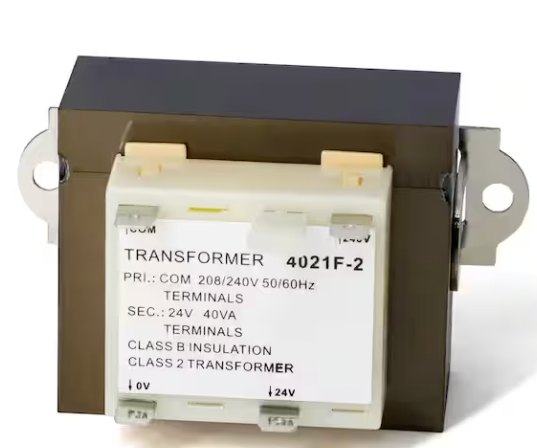
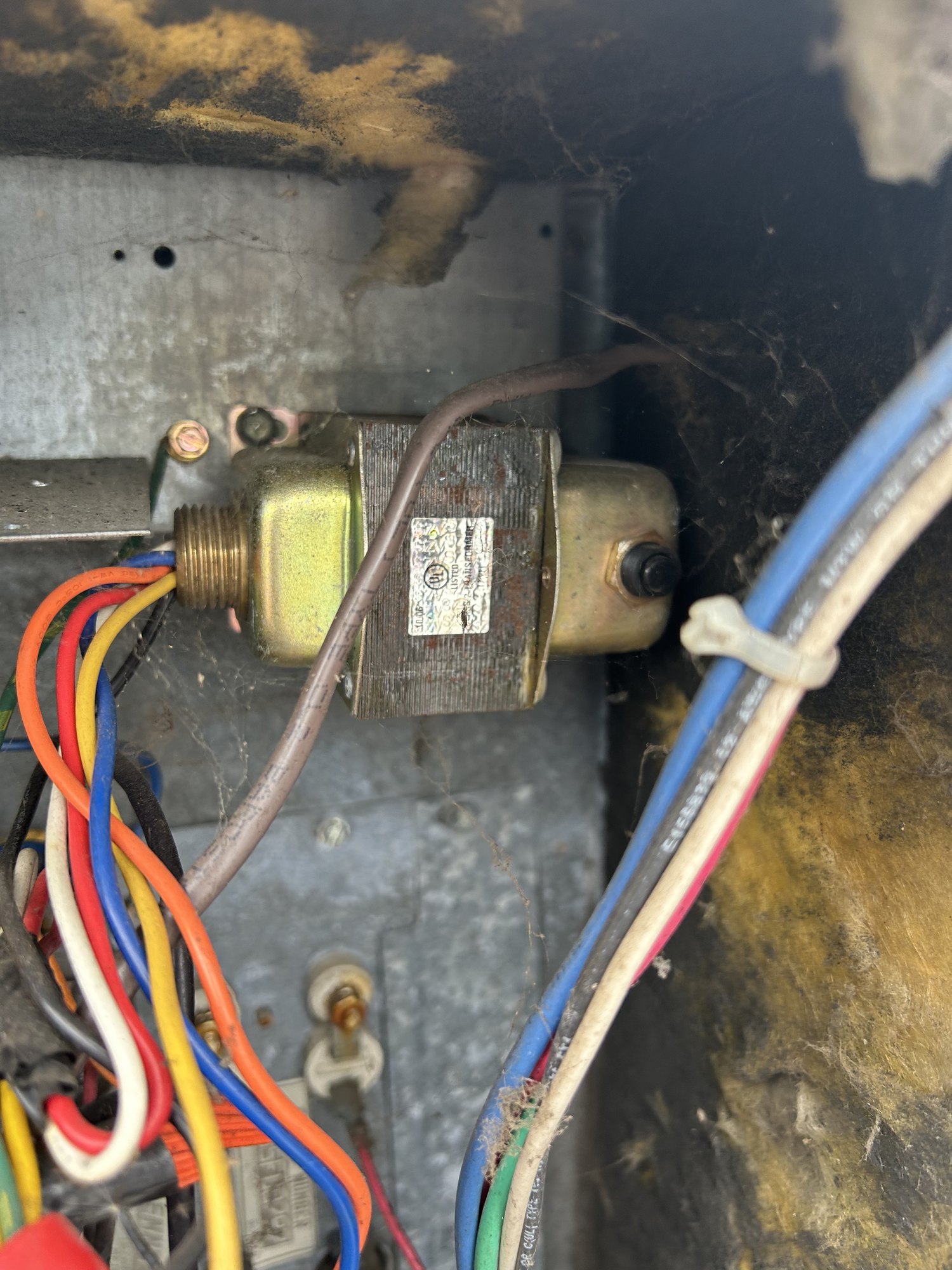
Your air conditioner runs on two electrical systems. The high-voltage side (240V) does the heavy lifting — the compressor and fan motors. The low-voltage side (24V) is the brain: it powers the thermostat, energizes the contactor that starts the outdoor unit, and feeds the safety controls. A small transformer steps 240V down to 24V, and a small fuse (typically 3 to 5 amps) protects that transformer.
When something shorts that 24-volt circuit, the fuse blows to save the transformer. Because the short is often intermittent, it shows up as maddening symptoms: a fuse that blows every few days, an AC outdoor unit not running, a contactor that won’t pull in, a thermostat that goes blank, or simply AC not cooling on the hottest day of the year.
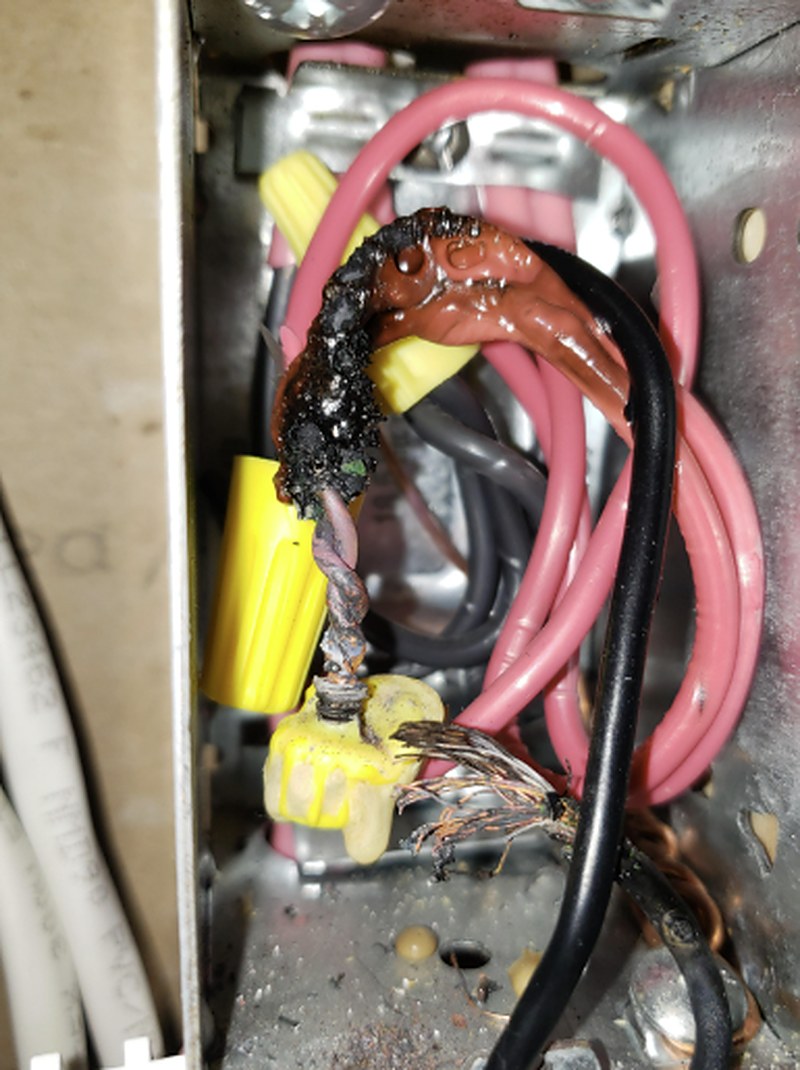
The cardinal sin is replacing that blown fuse with a bigger one — or bypassing it entirely — because the tech couldn’t find the short. That doesn’t fix anything. It just moves the failure from a two-dollar fuse to melted wires and a burned-out transformer.
1. The 24-volt circuit — and how a short announces itself
The low-voltage control circuit is the nervous system of the whole machine. The thermostat calls for cooling, that 24-volt signal travels down the thermostat wire, energizes the contactor coil, the contactor pulls in, and the condensing unit comes to life. A handful of amps runs the entire show — which is exactly why a tiny fuse protects it.
When a bare conductor in that circuit touches another conductor or grounds out against metal, it creates a dead short. Current spikes, and the low-voltage fuse blows on purpose to protect the transformer. The trouble is the symptoms rarely point straight at the cause:
- Intermittent fuse blowing — the unit works for days, then the fuse pops again for no obvious reason.
- AC outdoor unit not running — the contactor never pulls in because there’s no 24V getting through.
- Thermostat goes blank — a C-wire-powered or battery-assisted stat loses its 24V supply when the fuse is open.
- AC not cooling — the call for cooling never reaches the contactor, so the compressor never starts.
Here is where it goes wrong. A tech who can’t locate the short gets tired of changing fuses and reaches for a bigger one — a 10 or 15 amp in place of the 3 or 5 amp the factory specified — or wires around the fuse holder entirely. Now there’s nothing protecting the circuit. The next time that short touches, the full output of the transformer dumps into a thin 18-gauge thermostat wire with no fuse to stop it. The wire becomes the fuse. It overheats, melts its insulation, and can take the transformer with it.
2. Where low-voltage shorts hide inside the building
Almost every blown low-voltage fuse in a furnace, air handler, or rooftop unit traces back to a short somewhere in the thermostat wire — not the equipment itself. The wire is the long, vulnerable part of the circuit, and it picks up damage in a few predictable places:
- A nail or screw through the wire. When the house was built, a framer or drywaller drove a fastener into a stud and clipped the thermostat wire running through it. It may have worked for years until corrosion or movement finally bridged the conductors.
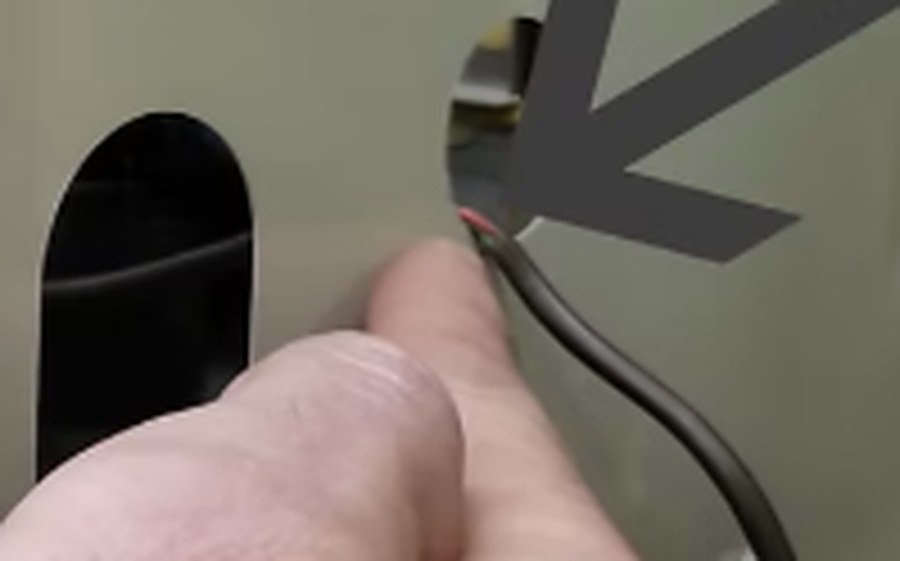
- Wire pinched at the cabinet. If the thermostat wire was pulled across a sharp sheet-metal edge or a knockout on the furnace, AC, or rooftop unit instead of being bushed and routed properly, the jacket sits against a knife edge. Every time the equipment cycles, it vibrates, and over time the metal saws through the insulation and shorts the bare conductors together.
- Wire run through ductwork. I’ve found thermostat wire fished right through the supply or return ductwork to save time. The constant air movement and blower vibration buzz the wire against the sheet metal until the jacket wears through — a textbook source of an intermittent short that only acts up when the system is running.
3. The outdoor run — sun, weather, and string trimmers
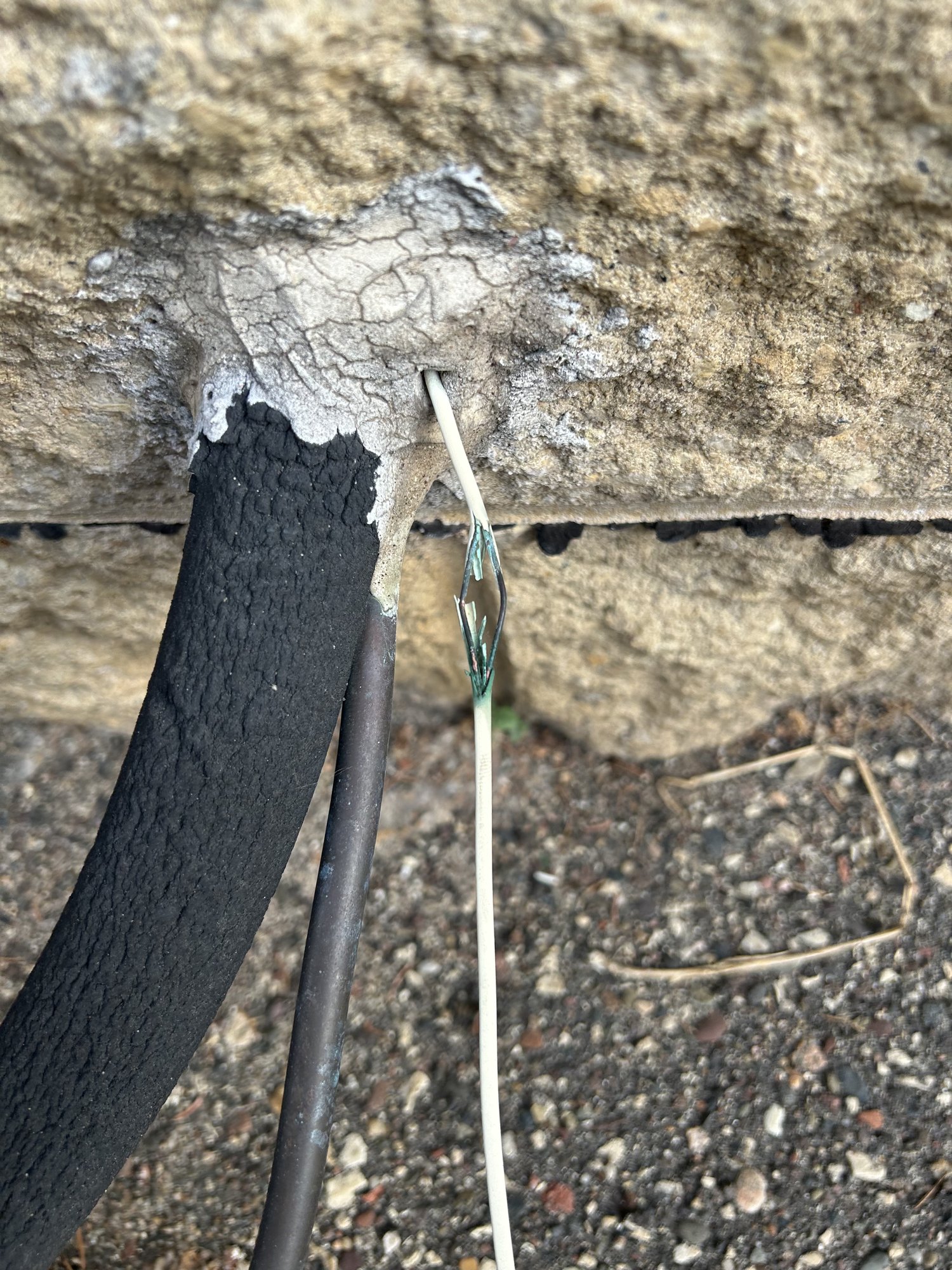
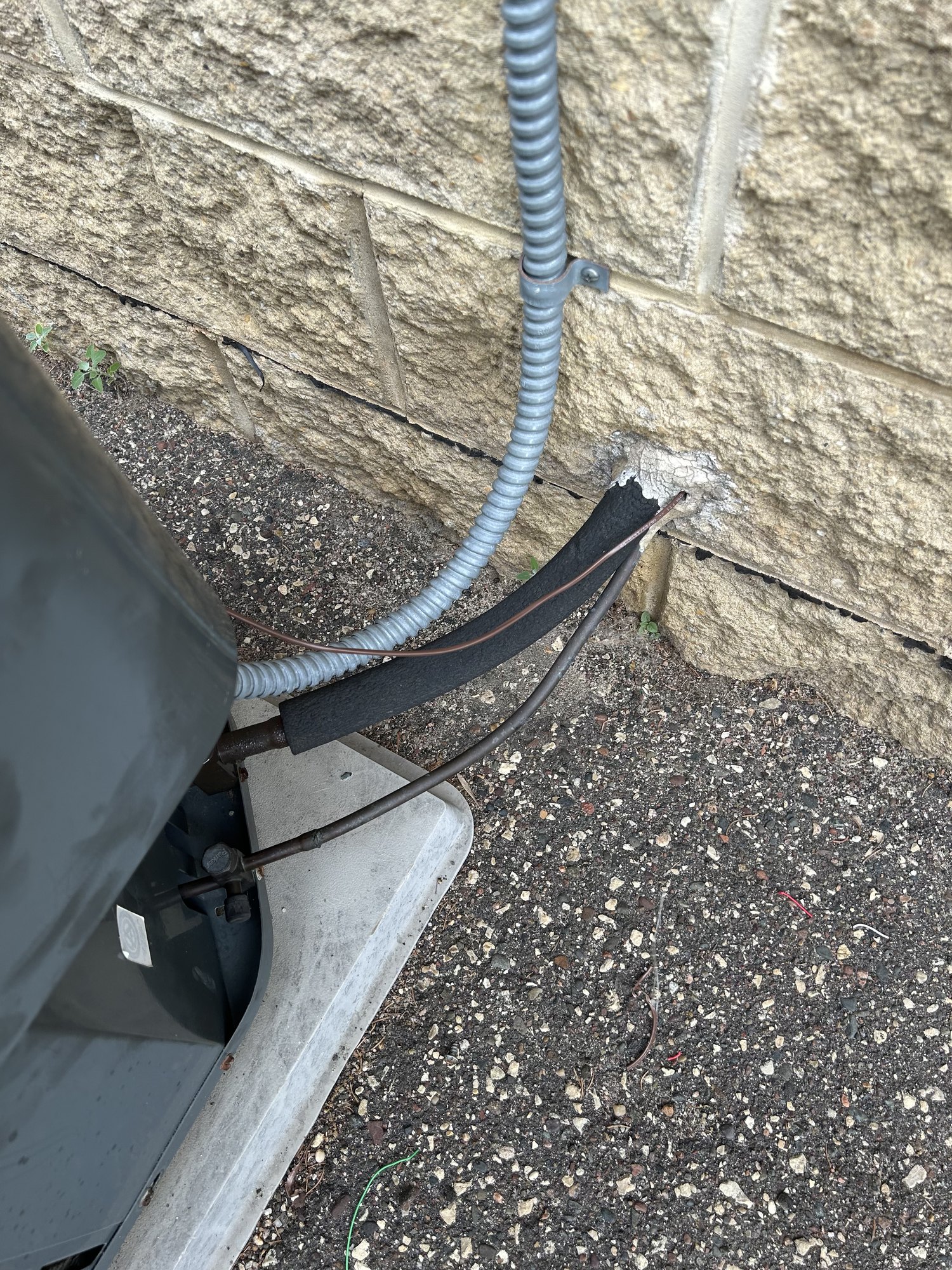
The most weather-beaten stretch of thermostat wire is the part nobody looks at: the run from the house out to the condensing unit, usually strapped alongside the refrigerant line set. That section bakes in direct sun for years.
Ultraviolet light slowly breaks down the plastic jacket until it gets brittle and cracks off, leaving the conductors exposed. Down low, string trimmers and weed whips nick the wire, and weed growth chafes against it. Once the copper is bare, you get a classic intermittent short: the wires read fine when it’s dry, then the circuit shorts the moment it rains and water bridges the exposed conductors — or any time the wind or a passing mower lets two bare wires touch. The AC works all morning and quits during the afternoon thunderstorm, then works again once everything dries out.
4. The one rule that protects the whole machine: same-size fuse, always
When you’re servicing an AC and the low-voltage fuse trips, always replace it with the exact same size the manufacturer specified — almost always a 3-amp or 5-amp automotive-style blade fuse. Never step up to a larger fuse, and never bypass the fuse to “get the unit running.”
That little fuse is the only thing standing between a minor control-wire fault and a melted harness or a dead transformer. A blown fuse is not the problem — it’s the symptom, and it’s doing its job. Put the correct fuse back, then go find out why it blew. If the replacement fuse holds, great; if it pops again, you’ve confirmed there’s a live short to chase, and you do it without cooking the equipment in the meantime.
5. How to actually find the short — ohm out the wire
You don’t need to tear open walls to confirm a shorted thermostat wire. One simple test isolates it. The idea is to take the wire completely out of the circuit and meter each conductor on its own.
- Kill the power to the equipment so nothing is energized.
- Disconnect the thermostat wire at BOTH ends — pull every conductor loose at the thermostat and at the equipment (furnace, air handler, or condensing unit). The run has to be floating, connected to nothing on either side.
- Separate the conductors so none of them are touching at either end.
- Ohm out each wire with your meter on resistance: check every conductor against every other conductor, and against ground. A healthy run reads open (no continuity) between separate conductors.
- Find the odd one out. The conductor with the problem ohms differently than the rest — it’ll show continuity to another wire or to ground where it should read open. That’s your short.
Once you know which conductors are compromised, you can decide whether to locate and repair the damaged spot or simply pull a fresh run. Nine times out of ten, when the wire is old, sun-rotted, or buried in a wall, the right answer is to replace the run with new, properly routed and protected thermostat wire — bushed through every cabinet penetration, kept out of ductwork, and run so the outdoor section is shielded from the sun and the string trimmer.
Low-voltage short field checklist
- Symptom check: intermittent blown fuse, AC outdoor unit not running, contactor not pulling in, thermostat going blank, or AC not cooling.
- Always reuse the factory fuse size (usually 3A or 5A). Never oversize. Never bypass.
- Suspect the thermostat wire first, not the board or transformer.
- Check the usual spots: nail/screw through the wire in a stud, jacket worn at a sharp cabinet edge, wire chafing inside ductwork.
- Inspect the outdoor run along the line set for sun-cracked jacket and trimmer damage — especially if it only shorts when it rains.
- To find it: kill power, disconnect both ends, separate conductors, ohm each one to the others and to ground — the bad one reads different.
- When in doubt, replace the run and route it correctly so it can’t happen again.
Frequently asked questions
Why does my AC keep blowing the low-voltage fuse?
A blown 24-volt fuse almost always means there’s a short in the control wiring — usually the thermostat wire. The fuse is protecting the transformer and doing its job. Replace it with the same size and find the short; don’t go up a size.
My thermostat keeps going blank — is that a low-voltage short?
It can be. If a short opens the low-voltage fuse, the thermostat loses its 24-volt supply and goes dark, then comes back when the fault clears. A blank thermostat plus an AC that won’t cool is a classic intermittent control-circuit short.
My AC outdoor unit isn’t running but the indoor fan works — what is it?
When the outdoor unit won’t start and the contactor never pulls in, the 24-volt call for cooling isn’t reaching it. A blown low-voltage fuse from a shorted thermostat wire is one of the most common causes, especially if it’s intermittent or weather-related.
Can I just put in a bigger fuse so it stops blowing?
No. Oversizing or bypassing the fuse removes the only protection on the circuit. The next time the short touches, the thermostat wire itself overheats and melts, and you can lose the transformer too. Always use the factory-specified fuse size and fix the actual short.
How do you find a short in the thermostat wire?
Kill the power, disconnect the wire at both ends, separate the conductors, and ohm out each one against the others and against ground. A good run reads open between separate conductors; the shorted conductor reads differently. Then repair or replace that run.
T&H Mechanical tracks down intermittent low-voltage shorts and control-circuit faults on residential and commercial AC across the East Metro and Western Wisconsin — and fixes them right, without bypassing the fuse.
(651) 413-3331AC Service & Controls · East Metro & Western WI
