
Why Is My AC Icing Up — and What Can I Do About It?
A frozen evaporator coil almost always comes down to one thing: not enough air moving across it. Here’s every cause, how to diagnose it properly with static pressure, and the one rule every tech should follow — verify airflow before you ever touch the refrigerant charge.
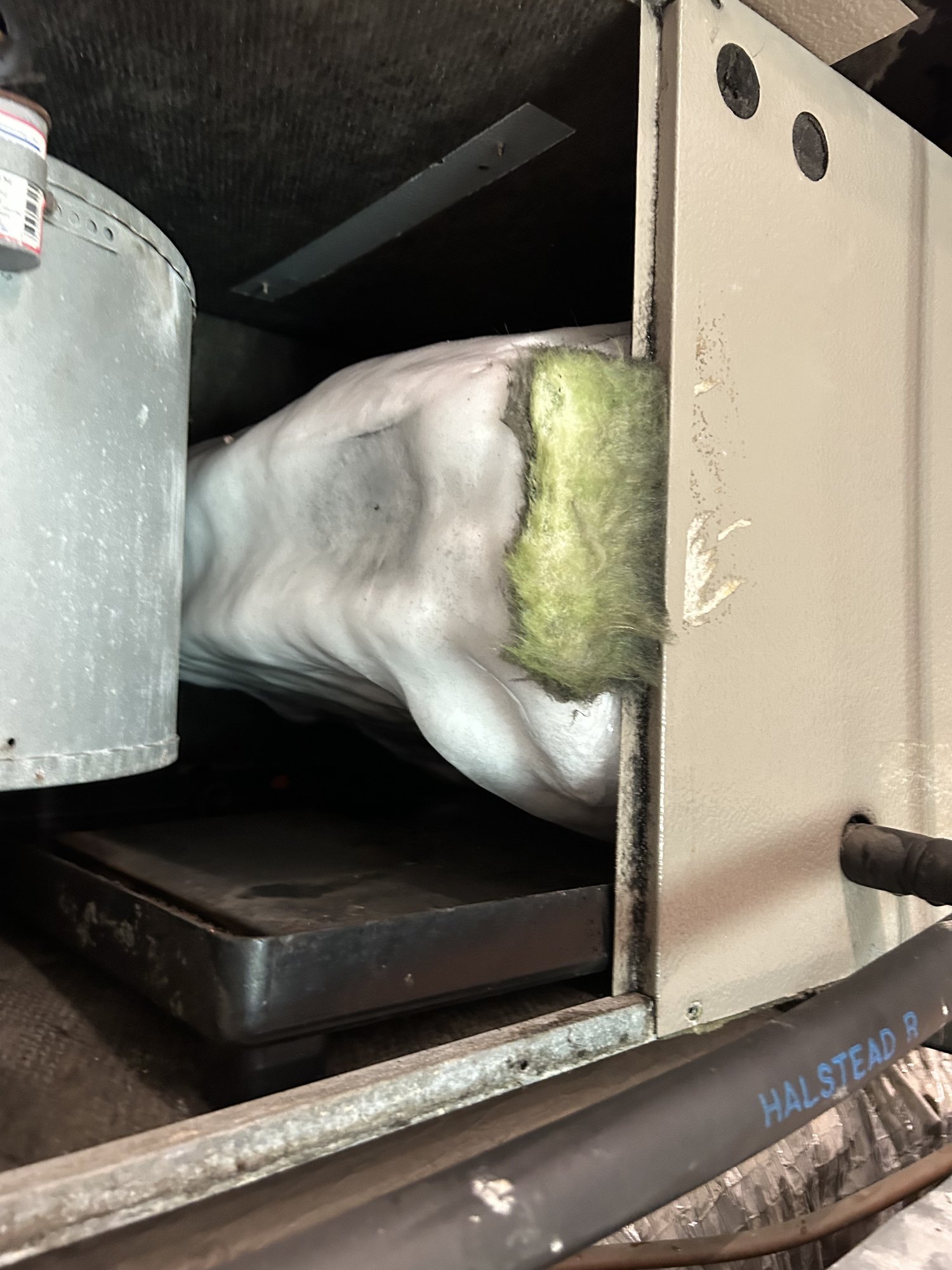
When the evaporator coil freezes, the AC quits cooling, the air from your vents drops to a trickle, you may see frost on the copper refrigerant line, and you’ll often find water on the floor once the ice melts. A coil freezes when its surface falls below 32°F, and that happens for two root reasons: not enough warm air moving across the coil (an airflow problem), or a refrigerant or operating-condition problem (low charge, or running the system when it’s too cold out).
The overwhelming majority of frozen coils are airflow. A dirty filter, a plugged blower wheel, closed or blocked vents, or undersized ductwork starves the coil of the warm air it needs to stay above freezing.
And here’s the rule that matters most: always verify airflow first — before you ever adjust the refrigerant charge. A system starved for air and a system low on refrigerant look nearly identical at the gauges. Add refrigerant to a system that’s really starved for air and you don’t fix anything — you make it worse.
1. What’s actually happening when a coil freezes
The evaporator coil is cold by design. In normal cooling, its surface sits around 40°F, just warm enough to pull heat and humidity out of the air without freezing. It stays that way only because a steady stream of warm return air — roughly 75°F from inside your house — keeps washing over it.
Take that airflow away and the balance breaks. With little or no warm air carrying heat to the coil, the refrigerant inside keeps absorbing the little heat there is and the coil temperature falls past 32°F. Humidity in the air then freezes onto the fins as frost, the frost builds into ice, and the ice blocks what little airflow was left — which makes the coil even colder. It’s a runaway loop: the less air, the more ice; the more ice, the less air. Left running, it ends up as a solid block of ice like the one above.
The damage isn’t just “no cooling.” A frozen coil can send liquid refrigerant back to the compressor (floodback), and liquid doesn’t compress — that’s how a freeze-up turns into a dead compressor. That’s why you never keep running an iced-up system.
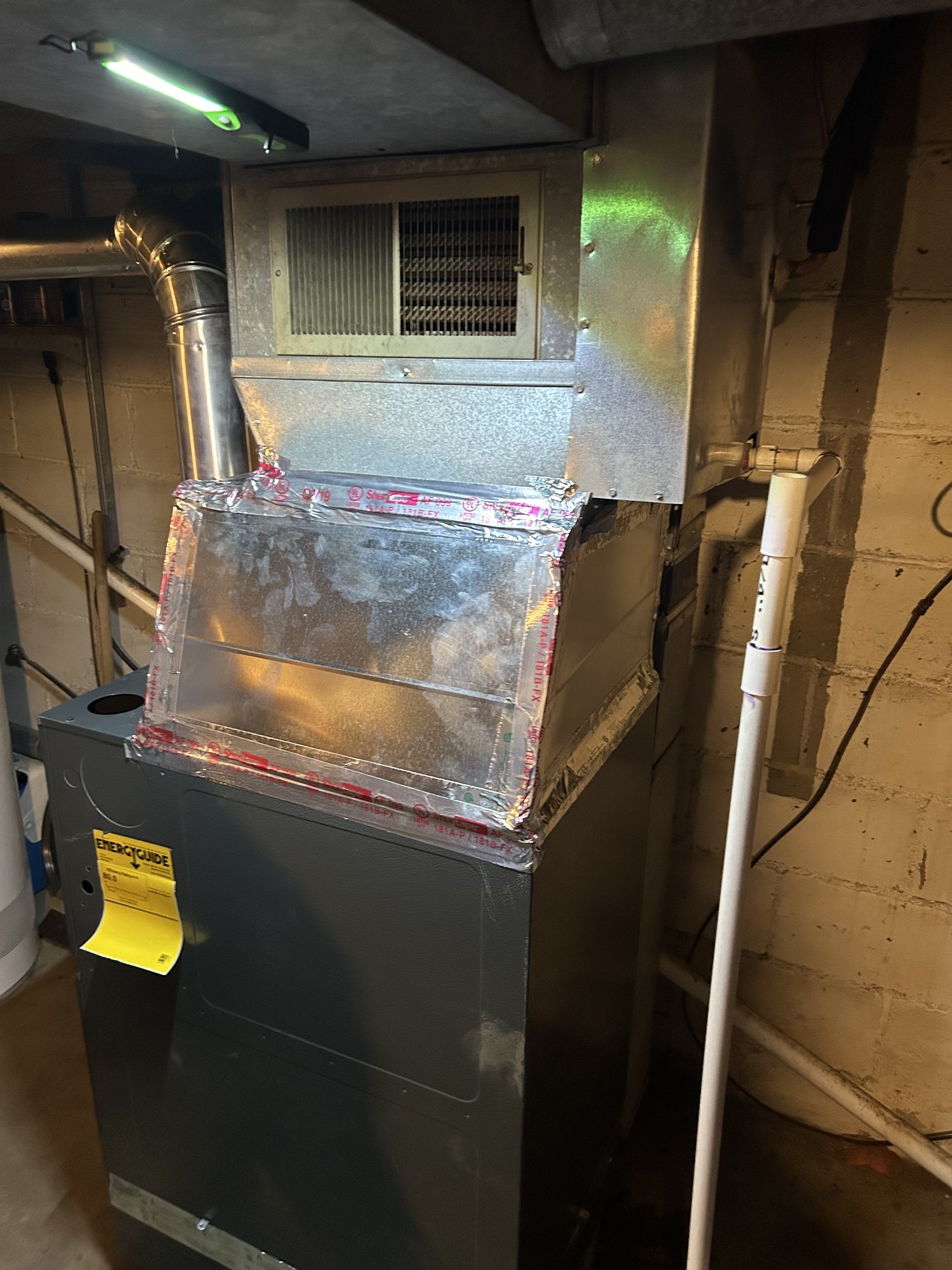
2. The #1 cause — lack of airflow
If your AC is freezing up, start here, because this is where the large majority of freeze-ups come from. Anything that chokes the volume of air moving across the coil can freeze it. The usual suspects:
- A dirty, plugged, or overly restrictive air filter. The single most common cause and the easiest to fix. A clogged filter, or a thick “high-MERV” filter the system was never designed to pull through, starves the coil.
- A dirty or plugged blower wheel. The squirrel-cage blower cakes up with dust over the years. A loaded wheel can move a fraction of its rated air even when it’s spinning at full speed — an invisible cause people miss because the filter looks fine.
- Closed supply vents. Closing registers in unused rooms feels like it saves energy; instead it raises pressure in the ducts and cuts total airflow across the coil.
- Blocked return vents. A couch, a rug, or a filter-grille caked with dust in front of the return choke the air the system can pull back.
- Undersized or restrictive ductwork. Ducts that are too small, crushed flex, or too many tight turns can’t deliver the air the coil needs, no matter how clean everything is.
- High static pressure from a blockage anywhere in the duct system. A collapsed duct, a closed damper, or a blocked coil all spike static pressure and drop airflow (more on measuring this below).
- An oversized AC. A system with more cooling capacity than the ductwork can feed will overpower the available airflow — the coil out-cools the air moving across it and freezes.
3. The other causes — set point, sizing, weather, and charge
Airflow is the headline, but a few other things will freeze a coil too:
- Thermostat set too low. Setting the thermostat way down (say 60°F) makes the system run nearly nonstop. On a milder day, that continuous run-time can walk the coil down below freezing even when airflow is decent.
- An undersized AC running constantly. A unit that’s too small for the space never satisfies the thermostat, so it runs around the clock — and a coil that never gets a break in humid weather has plenty of time to ice over.
- Running the AC when it’s too cool outside. Most standard air conditioners aren’t built to run when it’s below roughly 65–70°F outdoors. Cool outdoor air drops the refrigerant pressures inside the system, the coil temperature falls below freezing, and it ices up. Don’t run the AC to “test it” on a cool spring or fall day — without a low-ambient kit, it’s not designed for it.
- Low refrigerant charge. A refrigerant leak lowers the pressure (and temperature) in the coil, which can freeze it. But — and this is the important part — low charge is the last thing to check, not the first. (Here’s why.)
4. How to diagnose it properly — measure static pressure
“The filter looked clean” is not a diagnosis. The way to actually know whether a system can breathe is to measure its Total External Static Pressure (TESP) — the air-side equivalent of taking blood pressure. It tells you, in numbers, whether the air handler is moving the air it’s rated to move or fighting a restriction.
How to measure total external static pressure
- Use a digital manometer (or a magnehelic gauge) with a pair of static-pressure probes.
- Drill two 3/8″ test ports. One on the return side after the filter and before the blower, and one on the supply side after the blower and coil. Stay clear of the blower wheel, the heat exchanger, the coil, and any wiring when you drill — use a bit with a sheath so you don’t plunge into something.
- Zero the manometer to the atmosphere before you start.
- Run the system on its highest (cooling) airflow with everything buttoned up — doors and panels on, filter in place.
- Read both ports and add the absolute values. The return reads negative, the supply reads positive; add the two numbers together and that’s your TESP.
- Compare to the equipment’s rated maximum on the nameplate — usually about 0.5″ water column for a standard residential PSC blower. Measured TESP much over that and the system is choked, which is exactly what freezes a coil.
The real power of the test is that it pinpoints where the restriction is. Measure the pressure drop across the filter and across the coil on their own. A high return-side number points at the filter, the return grille, or undersized return duct. A high supply-side number points at the coil (dirty or iced), the supply ducts, or closed registers. Now you’re fixing the actual problem instead of guessing.
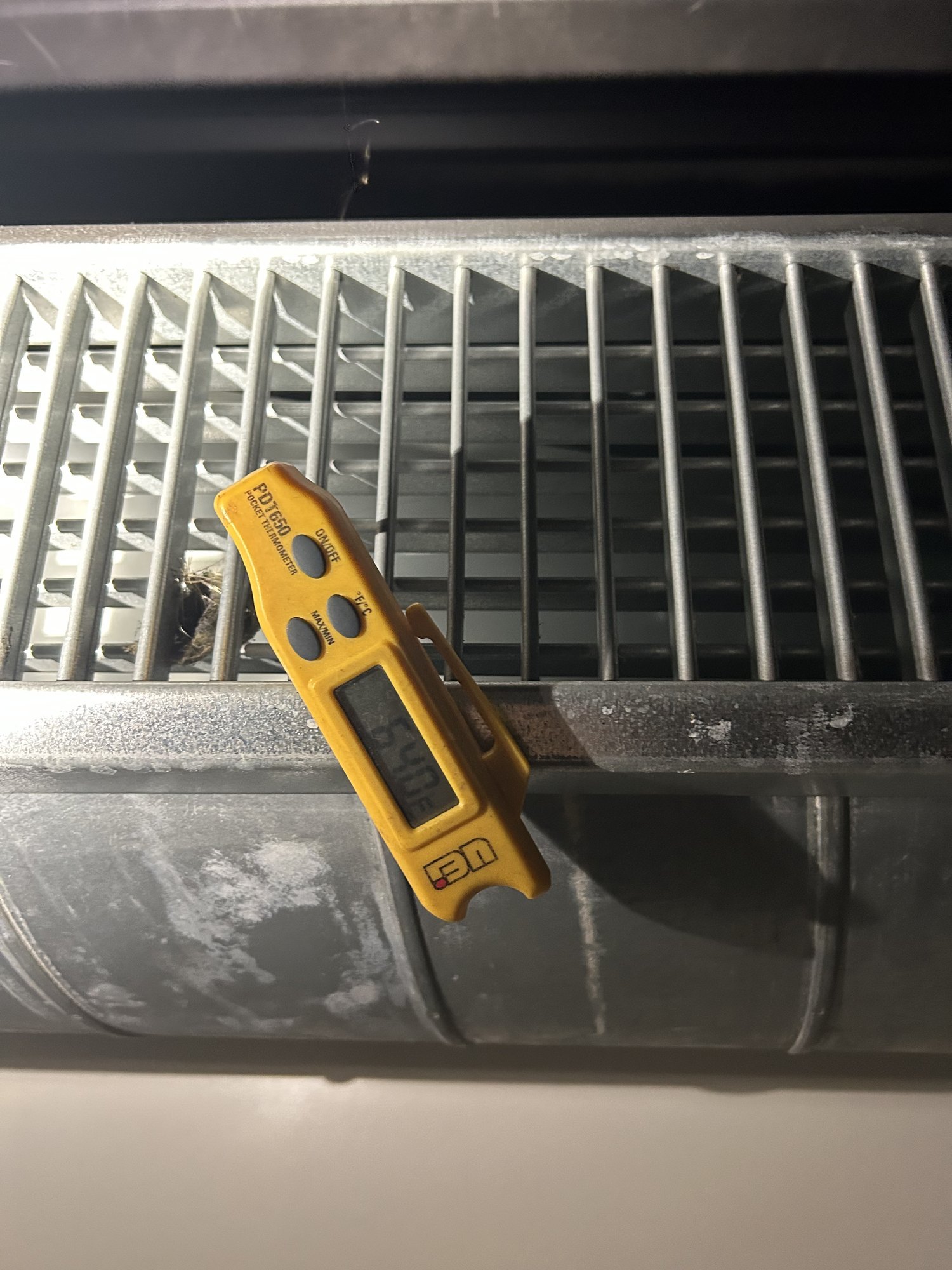
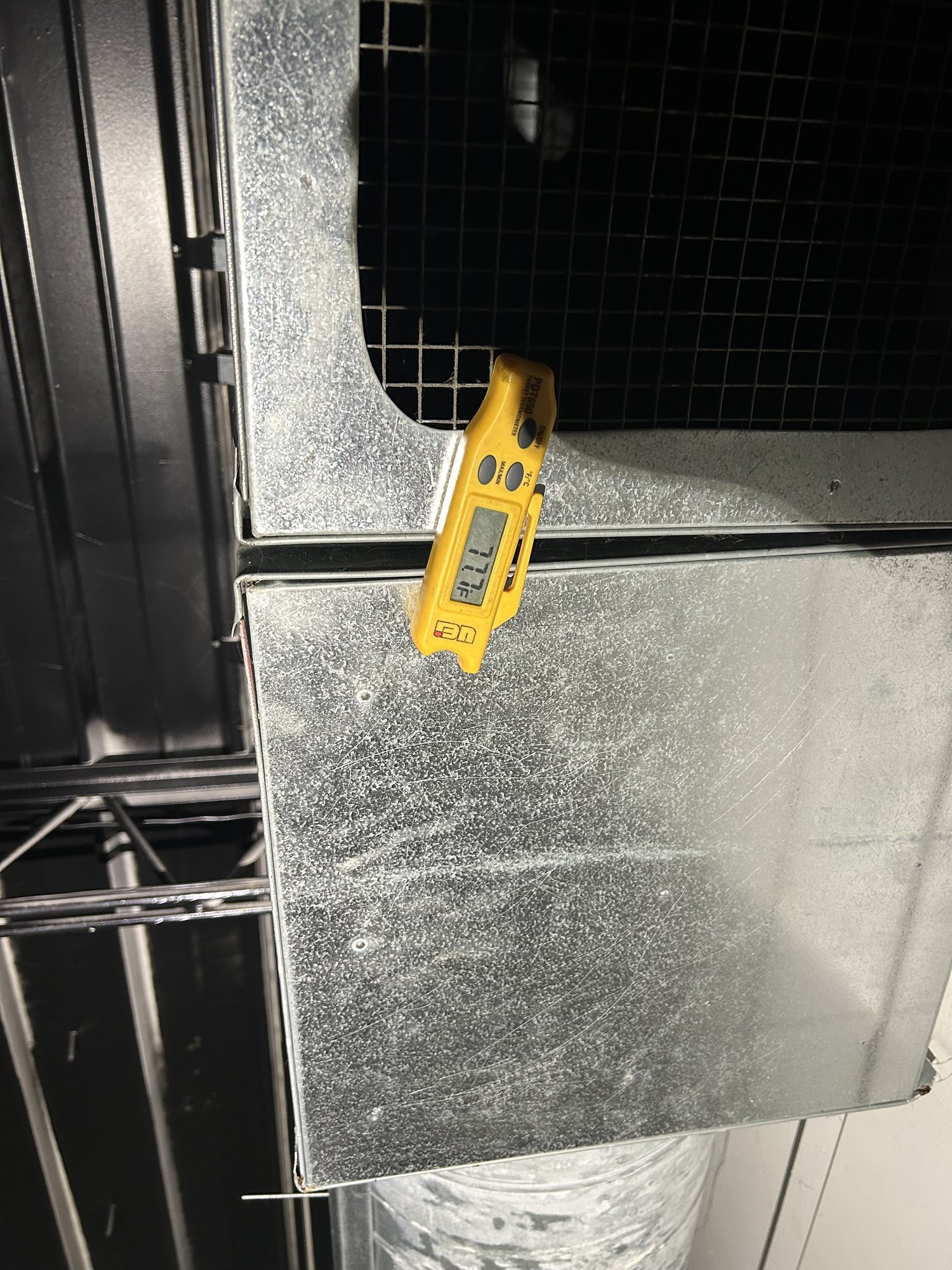
A fast field check that pairs with static pressure is the temperature split: the difference between the return air going in and the supply air coming out should land around 15–22°F. A split that’s too wide with weak airflow says the coil is starved for air; a split that’s too narrow can point toward a charge problem. Read it together with your static pressure numbers, not on its own.
5. The cardinal rule: airflow before charge
This is the one that separates a real fix from a callback. You must confirm proper airflow before you adjust the refrigerant charge — always, no exceptions.
Here’s why it matters so much. A system that’s starved for air and a system that’s low on refrigerant look almost the same on a set of gauges: both show low suction pressure and a cold, frosting coil. If a tech hooks up gauges to a low-airflow system, sees that low suction, and “adds a pound” to chase it, they’ve now overcharged a system that was never low. The airflow problem is still there, head pressure is now too high, and the overcharge can send liquid back to the compressor. You’ve traded a frozen coil for a wrecked compressor.
6. What you can do right now
If your coil is frozen right now:
- Turn the cooling OFF and set the fan to ON. Running the blower with the compressor off pushes room-temperature air across the coil and thaws it the safe way. Do not keep running it in cooling — that’s how you kill the compressor.
- Let it thaw completely before you restart cooling — that can take several hours for a solid block of ice. Put down a towel for the meltwater.
- Change the air filter. If it’s dirty, that may be the whole problem. Use the size and thickness the system was designed for.
- Open all your supply registers and clear the returns. Move furniture and rugs off return grilles and make sure nothing is closed off.
- Check the outdoor unit isn’t buried in leaves, grass, or cottonwood, and isn’t blocked.
- Don’t run the AC on a cool day. If it’s below about 65–70°F outside, leave it off.
Call a pro if: it freezes up again after a fresh filter, the blower wheel is caked with dust, you see oily refrigerant stains (a sign of a leak), your ductwork looks undersized, or you suspect the charge is off. A good technician will measure static pressure, prove the airflow is right, and only then check the refrigerant the proper way — so the fix actually lasts.
Frozen-coil quick checklist
- Symptoms: AC not cooling, weak airflow at the vents, ice on the copper line or coil, water on the floor when it melts.
- Stop running it frozen — cooling OFF, fan ON, and let it fully thaw before restarting.
- Airflow first: filter, blower wheel, open vents, clear returns, ductwork.
- Measure static pressure — TESP should be at or under about 0.5″ w.c. for a standard residential blower; isolate the restriction across the filter and across the coil.
- Don’t run the AC below ~65–70°F outdoors without a low-ambient kit.
- Never adjust refrigerant charge until airflow is proven good — airflow before charge, always.
Frequently asked questions
Why does my AC keep freezing up?
Almost always airflow. A dirty filter, plugged blower wheel, closed or blocked vents, or undersized ductwork starve the coil of warm air, so it drops below 32°F and ices over. Low refrigerant and running the AC in cool weather can do it too, but airflow is the first thing to check — and to fix — before anything else.
Can I run my AC while the coil is frozen?
No. Running a frozen system can send liquid refrigerant back to the compressor and destroy it. Turn cooling off, set the fan to ON to thaw the coil, and don’t restart cooling until it has fully melted and you’ve addressed the cause.
How long does it take a frozen AC coil to thaw?
With the cooling off and the blower fan running, a lightly frosted coil may clear in an hour or two; a solid block of ice can take several hours. Don’t rush it or chip at the ice — let it melt, and catch the water.
Is a frozen coil always low on refrigerant?
No — most frozen coils are an airflow problem, not low charge. Low refrigerant can freeze a coil, but a starved-for-air system looks identical at the gauges. That’s why a proper diagnosis checks and corrects airflow first, then verifies the charge.
Why does my AC freeze up when it’s cool outside?
Most standard air conditioners aren’t designed to run below about 65–70°F outdoors. Cool outdoor air drops the system’s pressures, the coil temperature falls below freezing, and it ices up. If it’s a cool day, leave the AC off.
T&H Mechanical diagnoses frozen evaporator coils the right way — measuring static pressure, proving the airflow, and checking the charge in the correct order — on residential and commercial AC across the East Metro and Western Wisconsin.
(651) 413-3331AC Diagnostics & Repair · East Metro & Western WI
