
The Twin Cities Florist’s Guide to Flower Coolers
Walk-In, Reach-In, and Open Display — a plain-English guide to buying, installing, and servicing floral refrigeration in Minnesota.
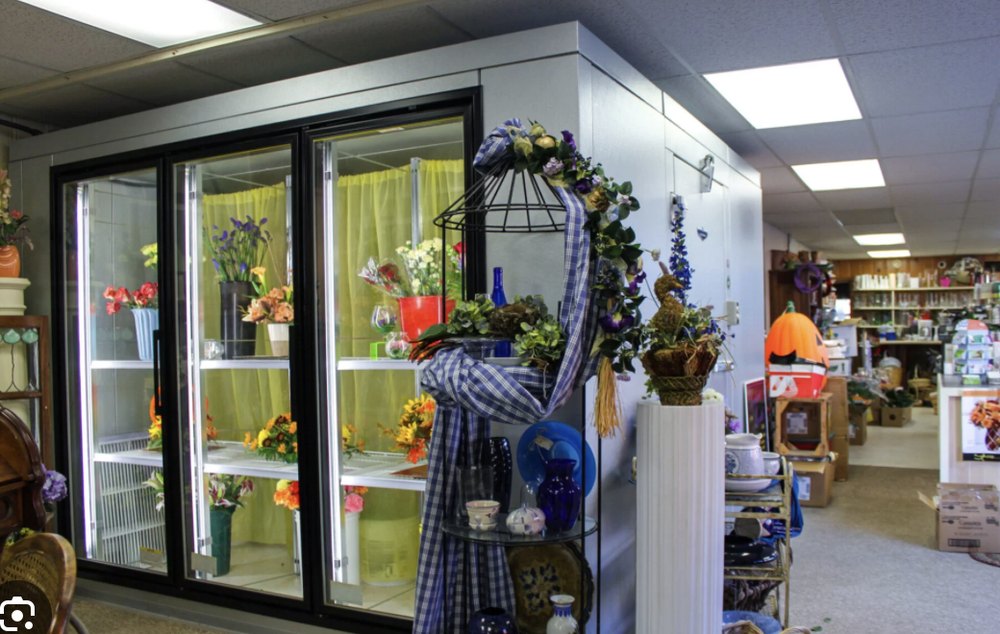
A flower cooler is not the same machine as a food cooler. Cut flowers need to be held cold and wet — roughly 34–38°F at 80–90% relative humidity — while a deli or beverage cooler is built to pull moisture out of the air. Run flowers in a standard cooler and they dry out, droop, and lose half their vase life. Get the temperature, humidity, and airflow right and the same blooms last roughly twice as long.
For a Twin Cities flower shop, the three real decisions are: what type of cooler (walk-in, reach-in glass-door display, or open-air display), where the refrigeration lives (self-contained inside the box vs. a remote condenser outside the building), and who keeps it running through a Minnesota winter. This guide walks through all three, plus the humidity, defrost, energy, and maintenance details that decide whether your cooler is an asset or a money pit.
Why a Flower Cooler Is Different From a Food Cooler
From the outside they look identical — insulated panels, a glass door, a compressor humming somewhere. The difference is on the inside, and it comes down to three things: temperature, humidity, and airflow.

The Three Types of Flower Coolers
1
Walk-In Floral Coolers
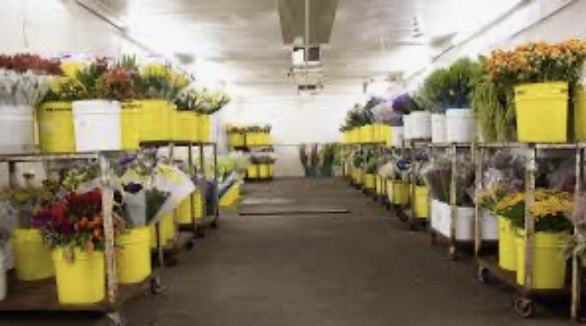
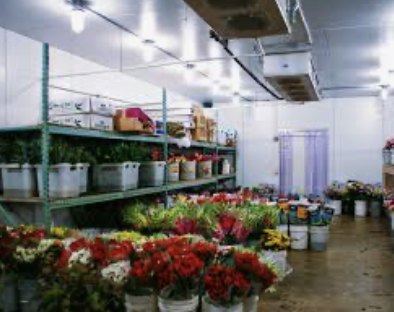
A walk-in is a built room — insulated wall, ceiling, and floor panels with a refrigeration system attached. It’s the workhorse for any shop holding real volume: wholesale buys, wedding and event inventory, holiday surges (Valentine’s Day and Mother’s Day are the two that make or break a florist’s year).
- The most storage per square foot, and the most flexible — you can add a glass display front so customers can shop the box while the bulk of your stock stays in the working area behind it.
- Easiest to dial in true floral conditions (oversized coil, low airflow, tight humidity) because the system is sized for the room.
- Built to whatever footprint and ceiling height your space allows; common retail display fronts run from a single section up to 14-foot-wide merchandisers.
- Needs the most square footage and the biggest refrigeration system.
- The refrigeration can be self-contained (everything in one unit mounted on the box) or remote/split (evaporator inside, condenser elsewhere). For a Minnesota shop this choice matters a lot — more on that below.
- A walk-in holding flowers will have water on the floor (buckets, misting, drips), so floor drainage, a non-slip floor, and a drain line that won’t clog are part of the design.
2
Reach-In / Glass-Door Display Coolers
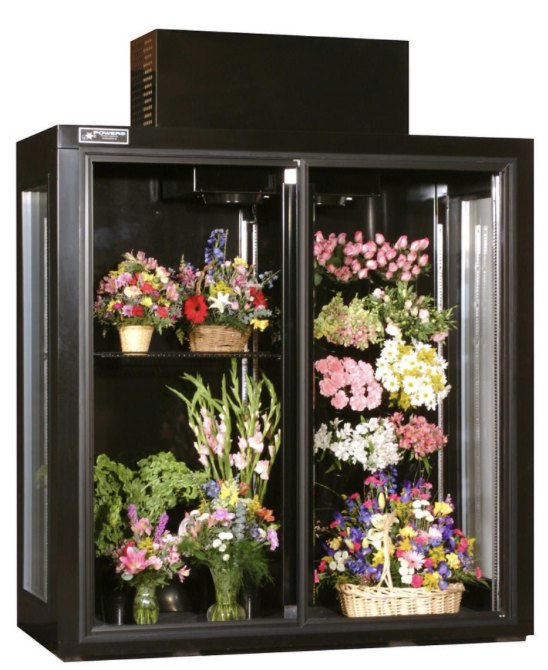
These are the upright, glass-door cases — single, double, or triple door — that sit on the sales floor. Think of them as a self-contained refrigerator built specifically for flowers, with full-glass fronts and LED lighting to merchandise the product.
- Floor-ready merchandising — clear glass and bright, flattering LED lighting make the flowers sell themselves. Fresh-looking flowers move; sad-looking ones don’t.
- Compact. Capacities typically run 10–50 cubic feet, in 1-, 2-, or 3-door models, with adjustable shelving since the cases are shallow.
- Self-closing, anti-fog dual-pane glass doors (swing or sliding) hold temperature and humidity without fogging over. Sliding doors save space in tight rooms; swing doors seal a little tighter and are easier for customers to hold open while they choose.
- Good units hold 34–36°F at 80–95% humidity with low-velocity airflow built in.
- Display cases get opened constantly, and customers linger with the door open — every open door lets warm, dry room air in and drives up both temperature and energy use. The glass and gaskets matter.
- Most reach-ins are self-contained (compressor in the cabinet), which means they dump their heat and a little noise into the retail space. Fine for a small shop; something to weigh if you’re running several.
3
Open-Air Display Coolers
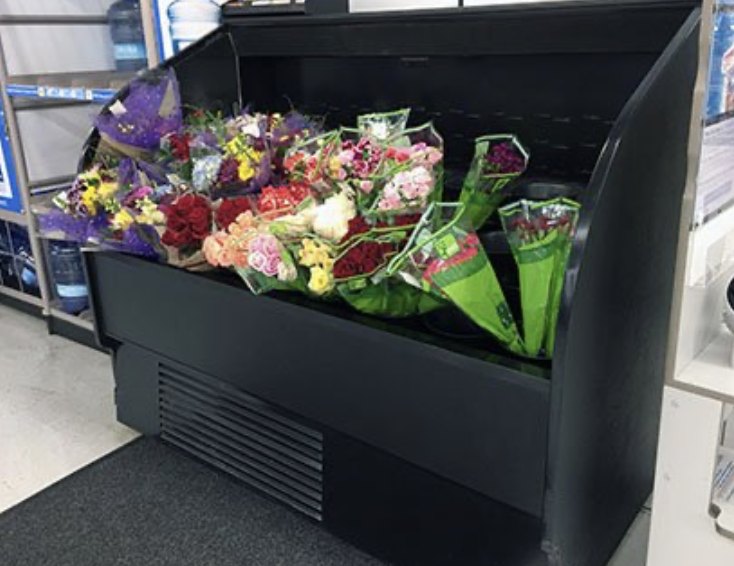
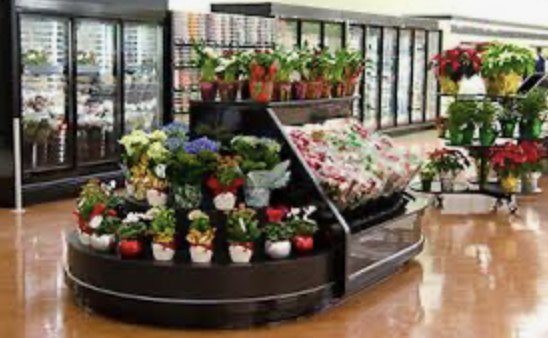
These are the open-front merchandisers with no door at all — an “air curtain” of cold air across the opening keeps the cold in while customers grab pre-made bouquets and grab-and-go arrangements without touching a handle.
- Fastest, most inviting customer access — nothing between the shopper and the flowers, which is exactly why grocery floral leans on them.
- Modern units place the blower and air curtain to run efficiently for what they are.
- An open box is the hardest to keep cold and humid, because there’s no door — the air curtain is the only barrier, and it’s easily disrupted by store HVAC, foot traffic, and drafts. That means higher energy use than a sealed case.
- The single best fix is a night cover/curtain pulled over the opening after hours. Independent testing on refrigerated open cases shows night covers cutting energy use by roughly 35%, and they also shield the flowers from store-heater warmth and UV. For a Minnesota shop running heat all winter, that’s real money.
- Open cases are the least forgiving of a marginal refrigeration system — if the box is undersized or the air curtain is off, the flowers on the front edge feel it first.
Humidity: The Detail That Makes or Breaks a Flower Cooler
If you remember one thing: flowers need humidity, and ordinary refrigeration kills humidity.
Every time a cooling coil runs, it pulls moisture out of the air (that’s the water dripping off your evaporator into the drain). Run a standard, undersized coil hard and fast, and the box gets dry — bad for flowers. The professional answer isn’t to spray water back in; it’s to design the system so it never over-dries in the first place:
- Oversized, low-velocity evaporator coil. A bigger coil can hold the box at 36°F while the coil surface itself stays relatively warm and the air moves slowly. Less temperature difference and slower air = less moisture wrung out = naturally high humidity. This is why a real floral coil is bigger and gentler than a food coil.
- Skip the humidifier in most cases. Floral refrigeration specialists generally warn against adding humidifiers to cold rooms — they encourage disease, mold, and mildew. Gentle misting can help certain sensitive blooms, but it’s easy to overdo, and a small circulation fan to keep air moving in the corners usually does more good than a humidifier.
- Watch the trade-off with defrost (next section) — the same high humidity that flowers love is what makes a flower cooler’s coil want to ice up.
Defrost Cycles in a High-Humidity Box
Here’s the engineering tension at the heart of every flower cooler. Flowers want cold + humid + gentle airflow — and cold, humid, slow-moving air is the perfect recipe for frost building up on the evaporator coil.
When moist air hits a coil running below freezing, the moisture condenses and freezes onto the coil fins. A little is normal — that’s why every refrigeration system has a defrost cycle that periodically warms the coil to melt the frost and send it down the drain. The problem is when frost builds faster than the defrost cycle can clear it:
- Ice blocks airflow through the coil, so the box stops holding temperature even though the compressor is running.
- A worn or leaking door gasket makes it dramatically worse — every bit of humid room air that leaks in dumps more moisture onto the coil, and the defrost can’t keep up.
- In a flower cooler, you can’t just crank the fan speed or run the coil colder to fight it, because that would dry out and damage the flowers. The fix is correct coil sizing, correct defrost timing, and tight door seals — not brute force.
What Does a Flower Cooler Cost to Run?
Refrigeration is the second-biggest electric load in most flower shops after lighting and HVAC. Real numbers depend on the size of the box, insulation, how often doors open, and your utility rate, but published operating-cost figures give a useful ballpark for walk-ins:
- Walk-in coolers generally draw 5–30 kWh per day depending on size.
- A small 6×6 walk-in runs in the neighborhood of $70/month; an 8×8 around $120/month; a 10×10 around $150/month — at roughly the national average power rate. A typical 8×8×8 box is often cited at about 8,000 kWh/year (~$1,200/year).
- Minnesota’s commercial electric rates and our long cold season shift those numbers, and an open-air case without a night cover can run well above a sealed box of the same size.
The biggest levers you actually control:
- Door discipline / night covers — open doors and uncovered open cases are the number-one energy leak.
- Clean condenser coils — a dirty condenser makes the compressor work harder for the same cooling (see maintenance).
- Tight door gaskets — a $40 gasket that’s leaking can quietly add a lot to the bill and cause icing.
- Where the condenser dumps its heat — which brings us to the most important decision for a Minnesota shop.
Self-Contained vs. Remote Refrigeration
Every cooler’s refrigeration is either self-contained (compressor and condenser packaged right on the box or inside the cabinet) or remote/split (the evaporator stays in the box, but the compressor and condenser are mounted somewhere else — a back room, the roof, or outside).
Self-Contained
- Lower upfront and install cost, simpler “plug it in” setup, no refrigerant lines to run, and easier to access for service.
- It dumps heat into your shop. A self-contained unit rejects all its heat into the room it sits in — in a small flower shop that fights your AC all summer, raises your cooling bill, and can make the retail floor uncomfortable.
- It adds humidity and a little noise to the customer-facing space.
- For one small reach-in, none of that is a big deal. Run several self-contained cases in a tight shop and the heat load adds up.
Remote / Split
- The compressor and condenser live elsewhere, so the heat, noise, and humidity leave your retail space — quieter sales floor, lower summer AC load, more usable room inside the box.
- Scales better for larger walk-ins and multi-case shops.
- Higher upfront cost and a more involved install — refrigerant lines, a licensed refrigeration tech, and a properly chosen location for the condenser.
- And in Minnesota, that location decision is the whole ballgame.
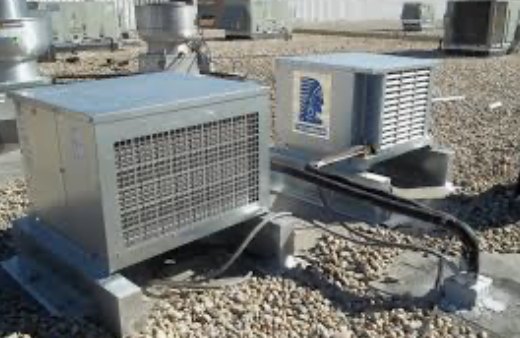
Putting the Condenser Outside
A lot of shops — and a lot of installers — default to mounting the condenser outside to get the heat out of the building. In a warm climate that’s a no-brainer. In Minnesota, an outdoor condenser that wasn’t set up for our winters is one of the most common reasons we get a “my cooler stopped holding temperature” call in January.
Low-ambient head pressure. A refrigeration system needs a certain pressure on the high side (“head pressure”) to push refrigerant through the metering device and actually cool the box. When it’s bitter cold outside, all that frigid air blowing through the condenser coil drops the head pressure too low — and the system can no longer meter refrigerant correctly. The result: the cooler won’t hold temperature even though it’s running, plus short-cycling, irregular run times, temperature swings, and erratic defrost. On the coldest, windiest days, an unprotected outdoor unit simply can’t keep up.
The fixes a Minnesota install needs
- Head-pressure control — at minimum a fan-cycling control that shuts the condenser fan off as it gets cold. But fan cycling alone isn’t enough here: on extremely cold, windy days, wind blows through the coil and over-cools it even with the fan off.
- A flooded-condenser / head-pressure (bypass) valve system for true low-ambient performance — it holds back refrigerant to keep head pressure up and can bypass the condenser coil entirely when it’s frigid. The right setup for a climate that’s extremely cold and windy all winter, which is exactly the Twin Cities from December through February.
- A crankcase heater to keep refrigerant from migrating into and diluting the compressor oil during cold-soaked off cycles.
- Wind shielding and smart placement so prevailing wind and snow drift don’t sit on the unit.
Snow and ice. An outdoor condenser buried in a drift or iced over can’t move air — the unit can’t reject heat and performance falls off. Outdoor units in Minnesota need to sit above expected snow level, clear of roof shed-off and drift zones, with room around them, and be checked after big storms.
Condensate drain freezing. The water a cooler pulls out of the air has to drain somewhere. If that drain runs through an unheated wall, a cold corner, or outside, it can freeze solid in a Minnesota winter — and a frozen drain backs water up into the box or onto your floor. Insulate the drain line, keep the run short, route it through conditioned space, and add heat tape on any vulnerable section. Skipping this is a classic warm-climate-playbook mistake that causes a mess every January.
Bottom line for Minnesota florists: a remote system with the condenser outside is often the right call for getting heat out of your shop — but only if it’s installed for our climate, with proper low-ambient head-pressure control, a freeze-protected drain, and a location that respects snow and wind. An outdoor unit set up like it’s in Texas will fight you every winter.
What About the Self-Contained Route to Avoid All That?
Some shops go self-contained specifically to dodge the outdoor-unit headaches — keep the whole system indoors and never worry about a frozen condenser. That’s a legitimate strategy, but it has its own costs, and they’re the same ones from earlier, amplified:
- All the heat stays in your building — great in January, a real burden every summer when it loads up your AC.
- Humidity and noise on the sales floor.
- For larger walk-ins, a fully self-contained unit may not have the capacity or efficiency of a properly designed split system.
There’s no universally “right” answer — it’s a trade-off between winter reliability, summer comfort, energy cost, and budget. The right call depends on your shop’s size, layout, how many cases you’re running, and how your space is heated and cooled. That’s exactly the kind of thing worth talking through with a refrigeration tech who knows the local climate before you buy.
Keeping a Flower Cooler Healthy in the Twin Cities
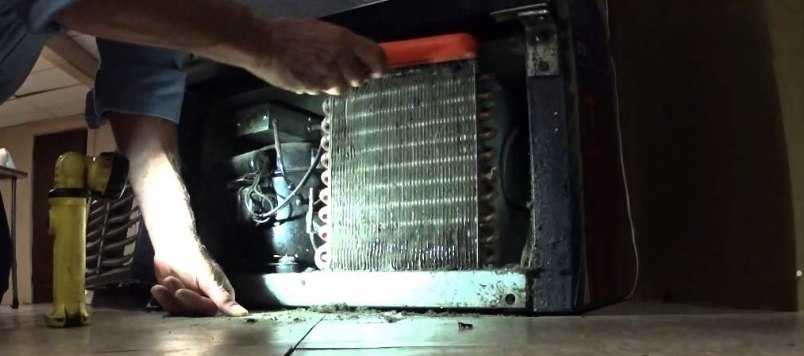
A flower cooler that gets basic maintenance lasts years and sips energy. One that’s ignored ices up, runs hot, spikes your power bill, and eventually dies on the worst possible day (read: the week before Valentine’s Day). The essentials:
- Condenser coil — clean it. A dirty condenser is the most common cause of a struggling system. Dust and lint insulate the coil so it can’t reject heat, the compressor overworks, energy use climbs, and the compressor’s life shortens. Clean it with a soft brush and a vacuum — never a wire brush, which bends the fins. At least every 6 months; quarterly in a busy or dusty shop.
- Door gaskets — inspect and replace. Cracked, brittle, or gapping gaskets let warm humid air leak in, which spikes energy use and causes coil icing. Clean them with mild soap and water, keep them pliable, and replace them the moment they stop sealing. Cheap part, big payback.
- Condensate drain — keep it flowing. Flush the drain line so it doesn’t clog with debris and algae, and in Minnesota make sure it’s insulated and heat-taped where it could freeze.
- Defrost — verify it’s working. If you see frost returning quickly after a defrost, or the box runs warm, the defrost cycle or door seals need attention before it cascades.
- Keep the box itself clean. Weekly, pull buckets and wipe ceiling, walls, and floor with a sanitizing solution. This fights mold and mildew (which thrive in a cold, humid box) and helps counteract ethylene gas buildup.
Flower-care basics that protect the cooler too:
- Clean, sanitized buckets and fresh water. Dirty buckets and stale water breed bacteria that shorten vase life dramatically — change cooler water at least weekly.
- Keep ethylene producers out. No ripening fruit (apples, bananas) or organic waste near the cooler — ethylene gas ages flowers fast, and carnations, snapdragons, lilies, and orchids are especially sensitive.
- Don’t overcrowd. Jammed shelves block the gentle airflow the cooler depends on, creating warm and dry spots.
Common Problems We See — And What They Usually Mean
Most of these are tune-ups and small parts if you catch them early. Left alone, they turn into compressor failures and emergency calls.
What temperature and humidity should a flower cooler hold?
For most cut flowers, 34–38°F at 80–90% relative humidity (some florists target 90–95%). Tropicals like orchids and anthurium are the exception and want 50–55°F.
Can I just use a food or beverage cooler for flowers?
You can, but you’ll regret it. Food and beverage coolers are built to remove humidity and move air fast — both of which dry flowers out and cut their vase life. A true floral cooler uses an oversized, low-velocity coil to hold high humidity gently.
Walk-in, reach-in, or open-air — which should I buy?
Walk-in for volume and back-stock (often with a glass display front). Reach-in glass-door cases for combined cold storage and sales-floor display in a smaller footprint. Open-air for high-traffic grab-and-go (grocery/impulse) — but plan on higher energy use and a night cover.
Should the condenser go inside or outside?
In Minnesota, both work — but each has a catch. Outside gets the heat out of your shop but must be installed for cold weather (low-ambient head-pressure control, freeze-protected drain, snow/wind-smart placement). Inside (self-contained) avoids the winter outdoor headaches but dumps heat, humidity, and noise into your retail space and loads your summer AC. The right answer depends on your shop — worth a conversation before you buy.
Why does my cooler freeze up in winter?
Usually one of three things: an outdoor condenser losing head pressure in the cold, a frozen condensate drain line, or a leaking door gasket overwhelming the defrost cycle. All three are common in Minnesota and all three are preventable with the right install and maintenance.
How often does a flower cooler need service?
Plan on condenser cleaning and a system check at least twice a year, with gasket and drain inspection each time — and ideally a check before the two big floral seasons (Valentine’s Day and Mother’s Day) so you’re not caught off guard at peak.
T&H Mechanical installs and services floral refrigeration built for Minnesota winters — across the East Metro & Western Wisconsin.
(651) 413-333124/7 Emergency Service
